The first casualty of steep market falls is often nuance.
Over the past few weeks, most global equities have been weathering significant uncertainty. This continued sentiment has raised the question of whether we're witnessing a long awaited reversion to the mean, or the beginning of something more consequential.
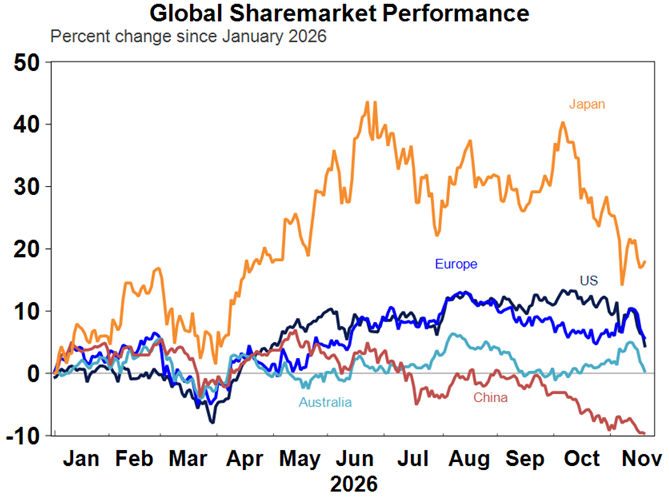
Source: Macrobond, AMP
As is tradition, the market's stumble has been accompanied by a surge in commentary.
Admittedly, I'm not one to waste the day away on social media platforms. I'd like to think this reflects a level of discipline, though the more likely explanation is that I possess the media habits of a retiree. Perhaps that's why I ended up at Firstlinks.
It is for this reason that LinkedIn remains something of a vice. At the very least, it allows one to squander half an hour at work while maintaining the outward appearance of productivity.
I log on intending to read about markets, and before long, find myself staring at an old investment quote superimposed over a mountain, wondering where the afternoon went. Case in point below.
 Source: Quotefancy
This particular investing adage stems from Buffett's 1986 Letter to Shareholders, often serving as a call to arms whenever markets become disjointed.
But there is an overwhelming tendency to treat investing wisdom as a collection of slogans rather than a framework for thinking.
An interesting discovery when looking at the original source is how little fanfare accompanies the famous line. Buffett offered no guidance on exactly how much fear was required before greed became appropriate. This ambiguity is likely why investors have spent the subsequent four decades playing fill-in-the-blanks.
The trouble with reducing this quote to a buy-the-dip mantra is that it assumes fear and opportunity are interchangeable. Certainly, there are times when short-term fear may accompany opportunity, though it may also point to a genuine repricing.
Is fear itself enough?
The Fear & Greed Index is a way to gauge stock market movements and whether companies are fairly priced. The theory is based on the logic that excessive fear tends to drive down share prices, and too much greed tends to have the opposite effect.
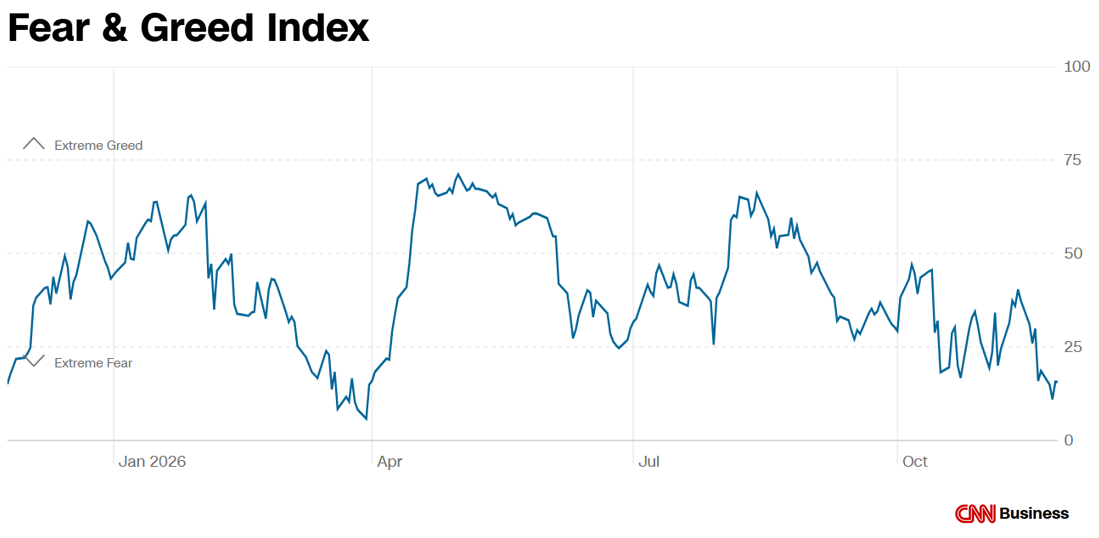
The quote is often mistreated as a signal - 'markets are fearful, therefore it's time to buy'. However, the presence of fear in the market tells us almost nothing about value. Throughout history there have been moments where the crowd overreacted spectacularly, but also others where the herd was directionally correct.
Much of Buffett's career was spent focusing on business quality, intrinsic value and competitive advantages, rather than the prevailing mood of the market. In this sense, fear was merely a condition that could (at times) create an opportunity, but it was never the opportunity itself.
Patience prevails
Arguably, the most overlooked aspect of the famous line is that it only addresses the moment of fear itself, but shows little context of what preceded it. After all, one cannot be opportunistic during a crisis without first having the means to do so.
It is easy to admire Buffett's seemingly bold purchases during periods of panic, but Berkshire Hathaway's history is littered with long stretches of patience and substantial cash balances. During this time, there has been no shortage of critics questioning whether the Oracle had finally lost his touch.
In many ways, the quote has acquired a slight survivorship bias and I think this is where the irony lies. Most of us want the Buffett ending, but far fewer are willing to endure the things that make this courage possible.
Concluding thoughts
When we’re at inflection points it’s easy to overstate the need to make a dramatic move to feel like we’re reasserting control. But there’s a large body of evidence that indicates attempting to make tactical shifts in the short term is detrimental to returns.
Markets are incredibly effective at identifying what investors fear and reflecting that accordingly. Of course, what they cannot do is instruct us how to act - that responsibility always remains our own.
Simonelle Mody
Also in this week's edition...
The debate around super often assumes that the alternative is simply paying more tax. Tony Dillion is back to explore whether superannuation tax concessions are really as large as we think.
Investors often assess investment products purely through the lens of performance. Jesse Hamilton believes this framing overlooks a key structural advantage unique to LICs.
The proposed CGT reform is designed to account for inflation. Jason Nassios and James Giesecke return to discuss why the new design may create higher tax burdens and unexpected consequences.
Marc Jocum explains why covered call ETFs offer a different approach to generating portfolio income, by helping turn market volatility into a source of regular returns.
ASIC has put the private credit sector on notice. For investors attracted by the promise of higher income, Dr Leigh Coney proposes five questions worth asking before investing in a private credit fund.
While many are focused on AI's extraordinary growth potential, William Taylor suggests far less attention is being paid to a risk that has already sparked backlash and could shape the future of Australia's data centre industry.
Big prizes can cloud good judgement. Jamie Hannah delves into the Anthropic IPO and whether the excitement on display bears any resemblance to what investors are actually getting.
Curated by Simonelle Mody and Leisa Bell
A full PDF version of this week’s newsletter articles will be loaded into this editorial on our website by midday.
Latest updates
PDF version of Firstlinks Newsletter (coming soon)
Australian ETF Review from Bell Potter
Listed Investment Company (LIC) Indicative NTA Report from Bell Potter
Plus updates and announcements on the Sponsor Noticeboard on our website