With Australian equities trading near record highs, while earnings expectations continue to soften and economic headwinds persist, investors may face a more challenging environment. Against this backdrop, covered call strategies can offer an alternative way to participate in Australian equities while generating an additional source of income and potentially improving the risk-adjusted profile of a portfolio.
Record highs mask a softer earnings outlook
August reporting season wrapped up recently, with almost half of ASX 200 companies recording share price moves of more than 5% on their earnings day, making it one of the most volatile reporting seasons on record. While the broader share market reached record highs last month, the outlook for corporate earnings and dividends has become more challenging. Company guidance generally fell short of consensus expectations, and forward earnings per share (EPS) growth forecasts have continued to be revised lower since the previous reporting season. Combined with uncertainty around inflation, interest rates and the broader economic outlook, this creates a more complex environment for investors seeking sustainable income and capital growth.
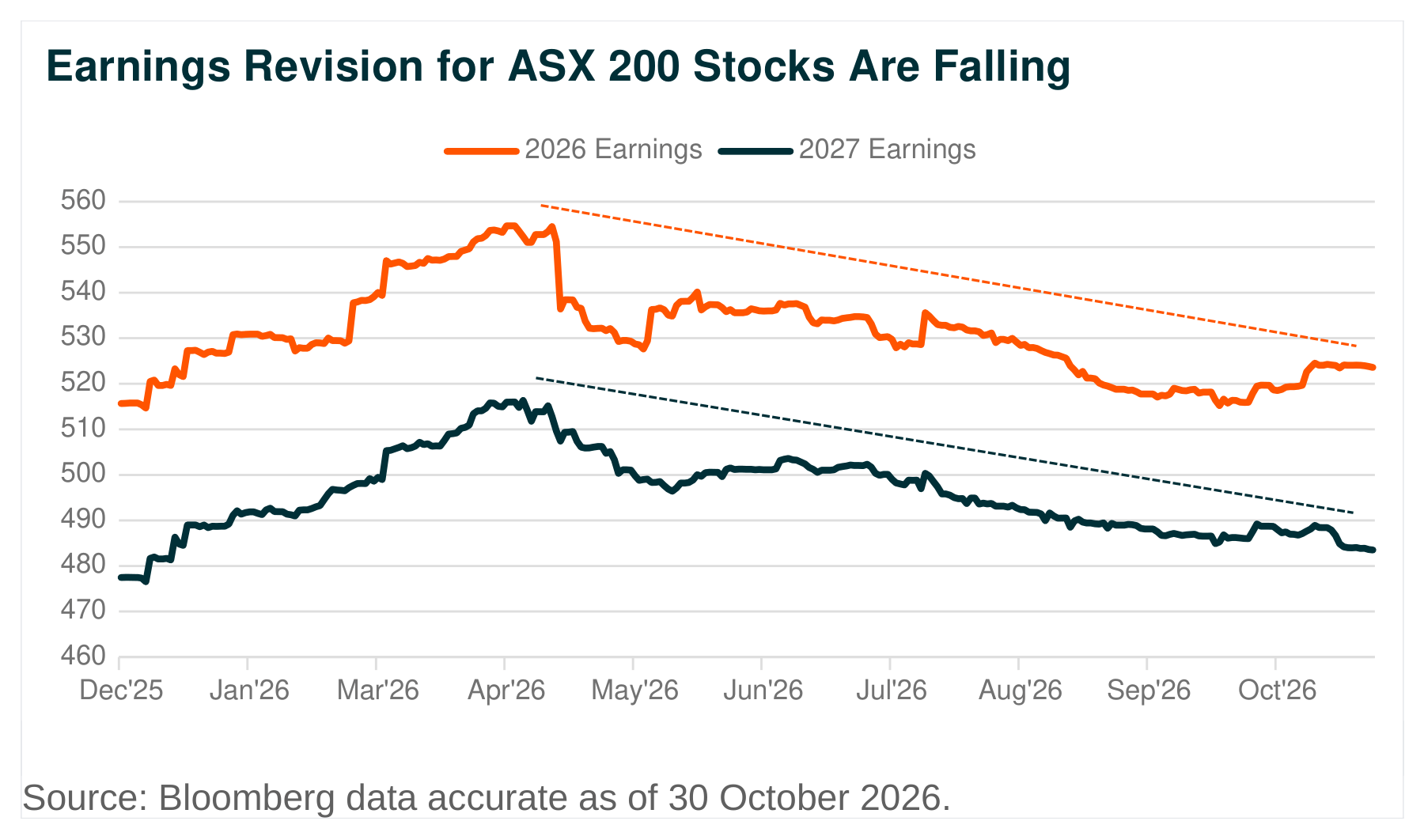
Against this backdrop, a subdued housing market, persistent inflation, fiscal uncertainty and the prospect of further RBA rate hikes could create further headwinds for Australian equities. We don't believe this is a reason to sell Australia. Rather, it highlights the potential value of changing the way investors access the market.
A covered call strategy provides exposure to a broad basket of shares while systematically selling call options to generate additional income. The trade-off is that some upside is forgone when markets rise strongly, but the option premiums received can provide an additional return stream and a degree of downside cushioning when markets are flat or weaker.
The Australian covered call market could be reaching an inflection point
Covered call ETFs have become an established part of the income market overseas, and Australia appears to be following a similar trajectory. There is now close to $5 billion invested in covered call strategies in Australia, almost 10 times the level of five years ago.
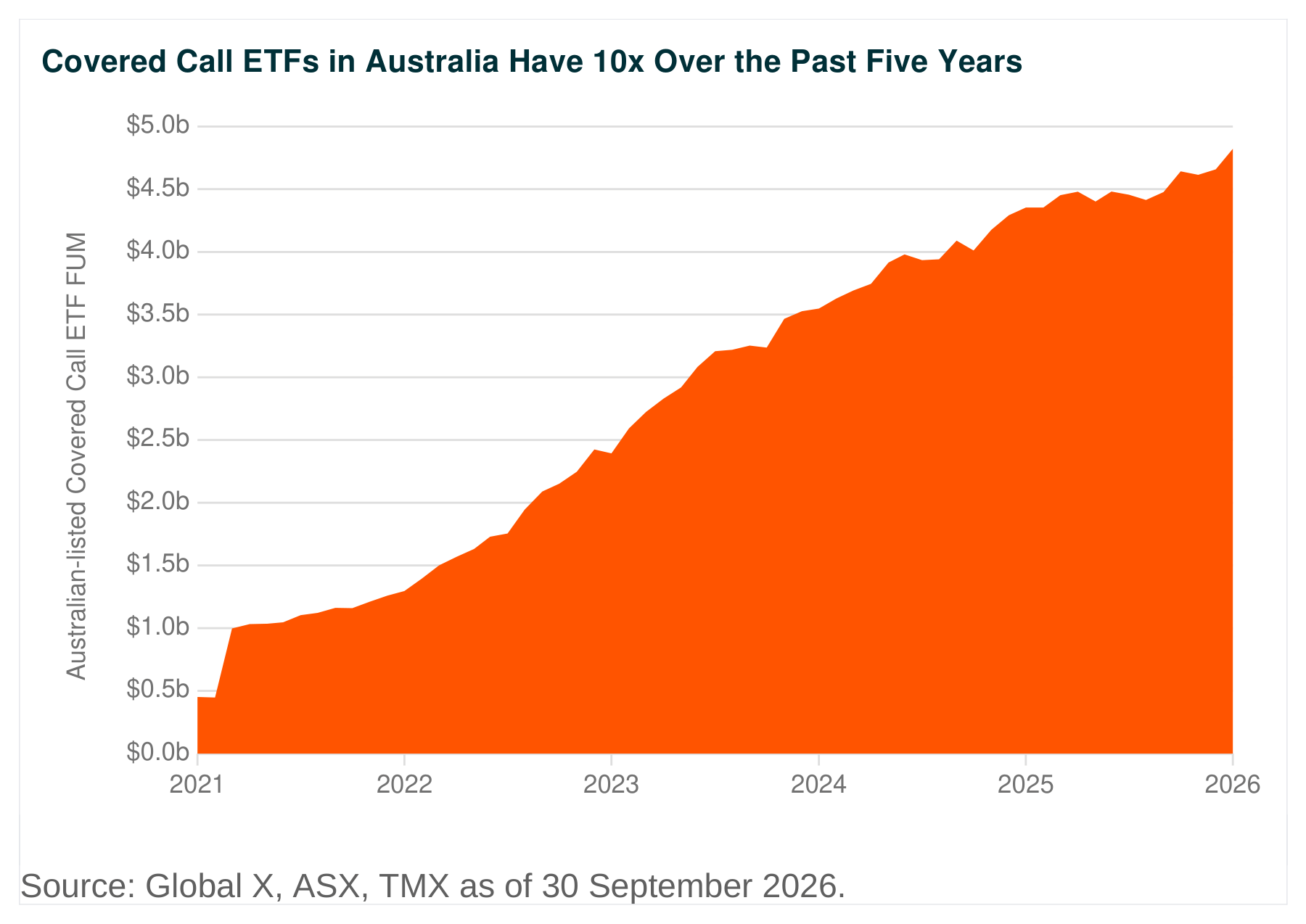
Following a period of strong flows into income-oriented ETFs over the past few months, we believe the income trade is entering a new phase in Australia, with investors increasingly looking across the spectrum of dividends, fixed income, and now alternative income to build a diversified source of income-producing assets.
Accessibility is helping drive this growth. Historically, options-based income strategies were often accessed through unlisted investment funds, sometimes with substantial minimum investments or eligibility restrictions for retail investors. ETFs have broadened access, allowing investors to buy and sell units through their existing brokerage accounts while gaining exposure to professionally managed options strategies.
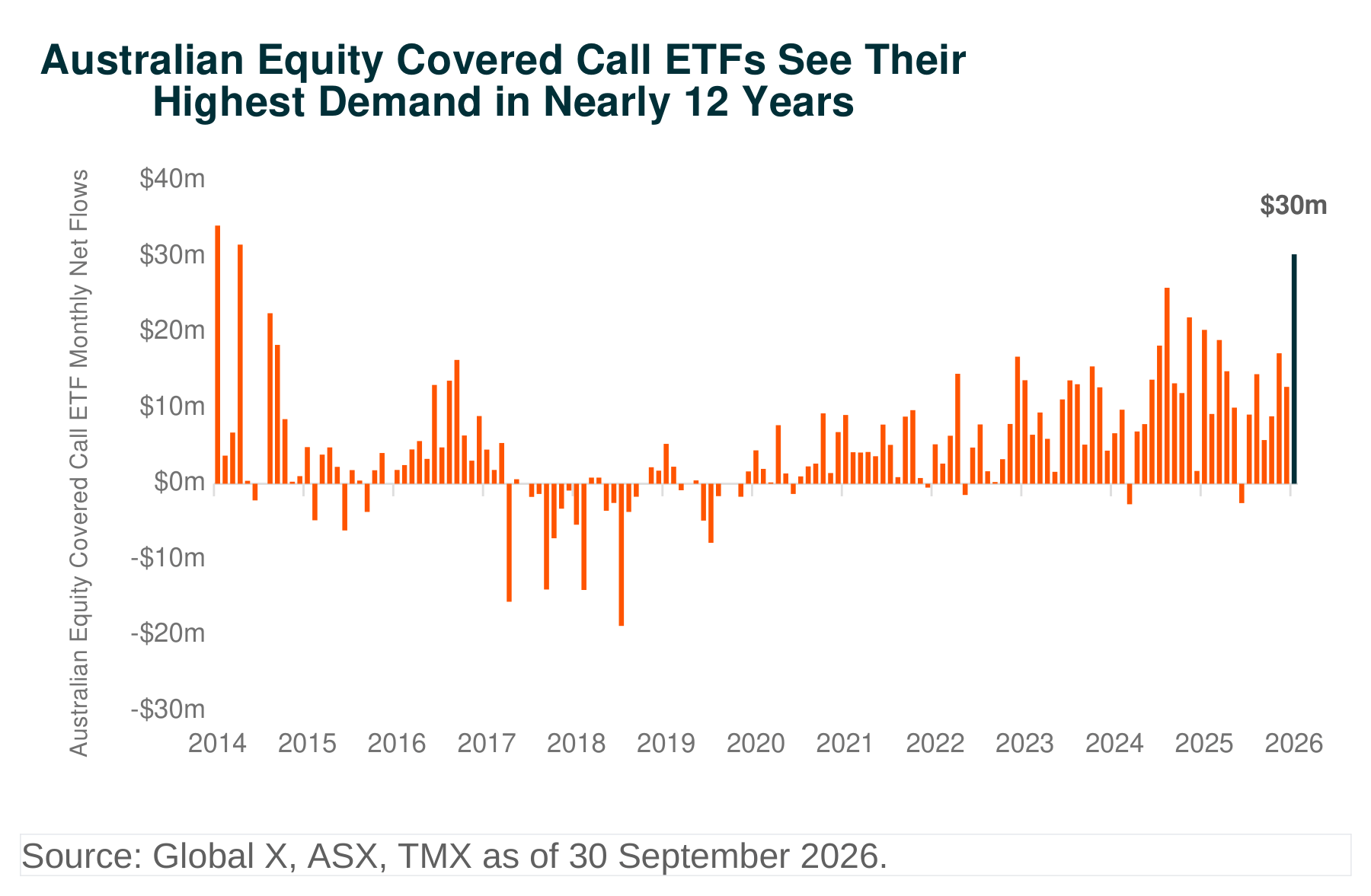
The Government’s capital gains tax (CGT) reforms are adding to the focus on income, as investors reassess the balance between capital growth and income. This shift is already evident in investor demand, with September 2026 recording the strongest monthly inflows into Australian covered call ETFs in almost 12 years, highlighting growing interest in alternative sources of portfolio income.
Building covered calls into a portfolio
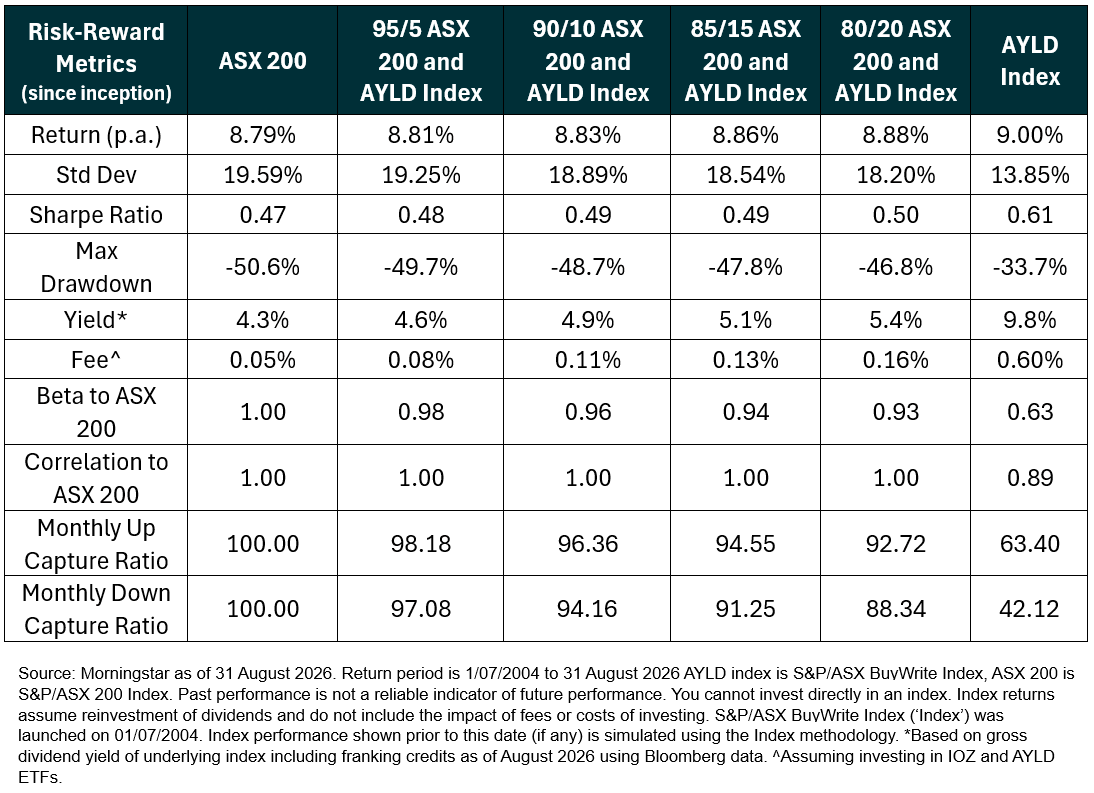
The potential benefit of a covered call allocation becomes particularly compelling when viewed through a portfolio construction lens. Rather than replacing an Australian equity allocation altogether, investors can blend covered call exposure with traditional equities to potentially retain much of the market's return potential while increasing portfolio income and reducing volatility.
The strategy also offers flexibility across markets. Australian investors can access covered calls over domestic equities, while those seeking exposure to US shares can consider Nasdaq 100 or S&P 500 strategies. These provide alternative ways to generate option premium income from international equity markets, with different underlying exposures and associated risks.
Importantly, covered calls need not replace traditional income investments. They can sit alongside dividend-paying shares, fixed income and cash as part of a diversified portfolio. For investors seeking to increase portfolio income without abandoning equity exposure, the strategy offers another tool to balance income generation and capital growth.
Final thoughts
As investors look to diversify their income sources, covered calls offer a compelling addition to the investment toolkit. By combining equity exposure with option premiums, they provide another way to generate income while potentially reducing portfolio volatility and market sensitivity. Australia's rapidly growing covered call market reflects increasing interest in these strategies, while historical results demonstrate their potential to complement traditional equities. For investors seeking a balance between income and capital growth, an allocation to covered calls, accessed through an ETF, can provide another way to build a diversified portfolio and navigate a changing investment environment.
Key Takeaways
- A softer outlook for the Australian market could make the path to investment gains more challenging, with Australian equities near record highs while earnings expectations continue to be revised lower.
- The investment case for income is gaining momentum as the capital gains tax reforms have seen investors increasingly look to income as a more important contributor to total returns.
- Covered calls are gaining traction as an alternative income engine, with the strategy outperforming the broader Australian share market so far in 2026, while delivering a superior income yield and a lower historical volatility profile.
Marc Jocum is a Senior ETF Strategist at Global X ETFs Australia, a sponsor of Firstlinks.
Issued by Global X Management (AUS) Limited (‘Global X’) (AFSL 466778, ACN 150 433 828). This is general information only and not personal advice. This communication doesn’t consider your personal circumstances or needs. Investors should consider whether these products are appropriate for them, obtain financial advice and read the product disclosure statement (PDS), prospectus (as applicable) and target market determination (TMD) before making investment decisions. All PDSs, prospectuses and TMDs are available on our website. Investment in any products are subject to risks, including possible delays in repayment and loss of income and principal invested. Past performance is not a reliable indicator of future performance.
Related products
- Global X S&P/ASX 200 Covered Call Complex ETF (AYLD)
- Global X Nasdaq 100 Covered Call Complex ETF (QYLD)
- Global X S&P 500 Covered Call Complex ETF (UYLD)