Retirement requires a fundamental shift – to our lifestyles, finances, and mindset. After a lifetime of saving, we shift to decades of spending. This is a change that doesn’t come naturally for many of us. As we live longer, with retirement now spanning thirty years for the average Australian, knowing how much money we will need to fund our post-work years has become a mounting challenge.
With 250,000 Australians stepping into retirement every year, it is imperative to understand how spending expectations of Australians change as they approach and enter retirement. To do so, I partnered with retirement income provider, Challenger, to survey more than 1,000 Australians aged 60 to 80 with superannuation balances over $100,000.
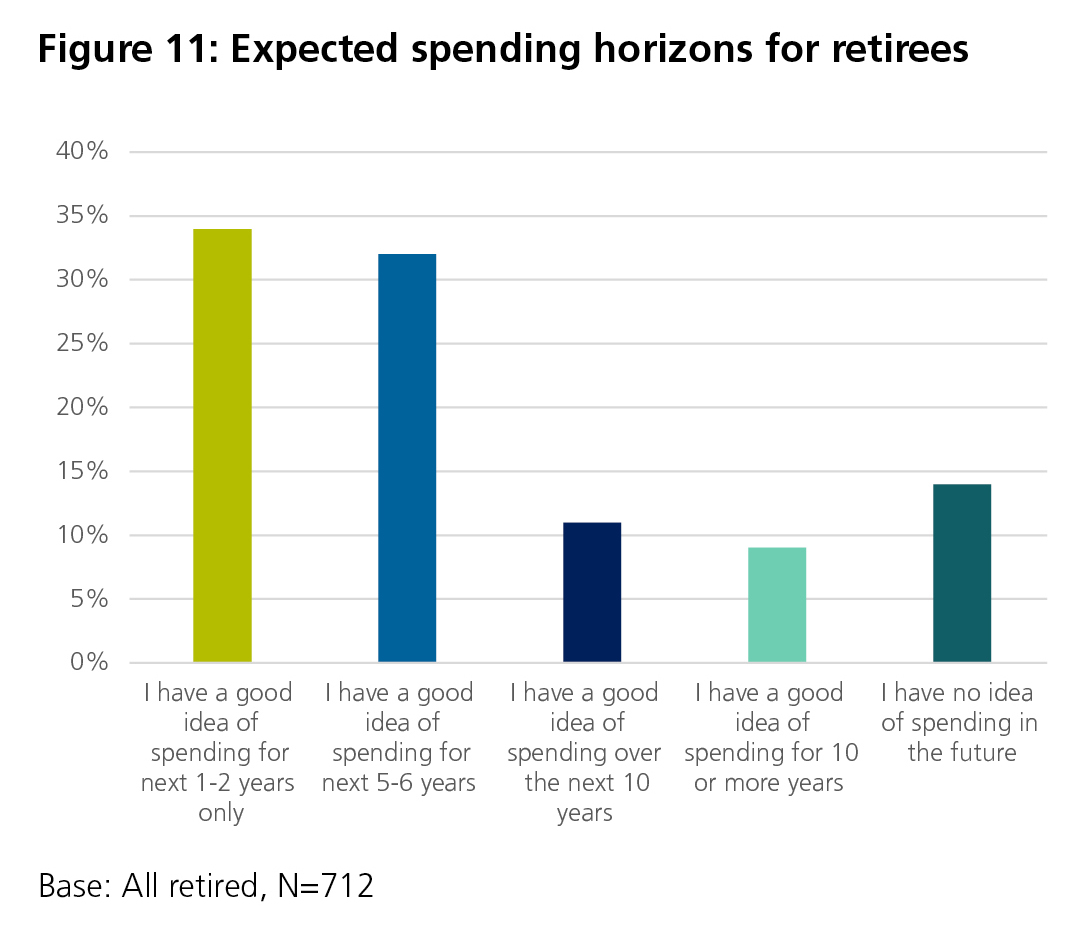
While a third of retirees (34%) were able to confidently predict their spending in the next one to two years, this figure fell to just 1 in 10 (11%) when asked to predict over the next decade. Concerningly, 14% of retirees and 19% of pre-retirees had no idea about future spending over any time horizon.
Fears were more pronounced for pre-retirees, with uncertainty over the future leading to concerns that money would run out (46% pre-retirees v 21% retirees), worries about unexpected health and aged care costs (45% pre-retirees v 26% retirees), and concerns about having enough money for daily living expenses (30% pre-retirees v 12% retirees).
Retirement is a significant stage of life that can last for decades. Understanding our spending habits is critical to informing how much retirement savings we will need.
It has been said for many years that retirees are under-spending to leave an inheritance for their children. Our research found this to very much be an oversimplification. For many, they underspend as they worry they may have no savings left when they get older.
Ultimately, the research revealed that spending came down not to your superannuation balance or the value of your home, but to your retirement mindset. We need to give more Australians the confidence to enjoy retirement.
There is no one uniform lifestyle in retirement
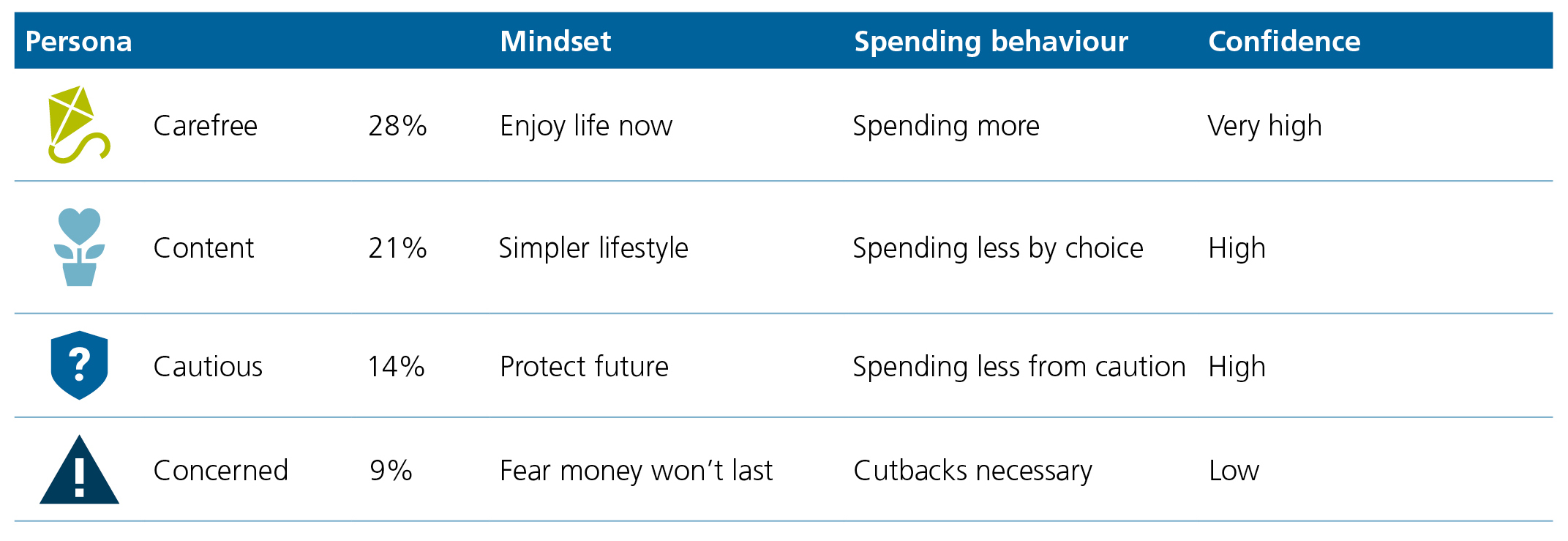
While 82% of retirees are confident they can afford their desired retirement lifestyle, the confidence to spend varies significantly depending on your mindset, with the research uncovering four distinct retirement personas:
Carefree: retirement is a time of freedom. Almost 30% of respondents identified as Carefree, focused on enjoying life – travelling, socialising with friends, and spending time with grandchildren while unburdened by financial concerns.
Content: a lifestyle enjoyed by around 20% of respondents, who chose a simpler retirement and to spend mindfully. Importantly, this group is spending less by choice and remains confident their savings will last for life.
Cautious: these respondents (15%) were careful with their money due to uncertainty it will last. While only half expected to have superannuation left for their estate, three quarters (74%) were confident they could afford their lifestyle. Cutting back on spending helped this group to navigate the unexpected.
Concerned: These retirees had a genuine fear of running out. Approximately 10% of respondents were living on a tight budget out of necessity, surviving on much less income than they used to. Many with this lifestyle are reliant on the Age or Disability Pension, with higher living costs compounding the challenge.
Positively, half of Australian retirees are living a Carefree or Content lifestyle, enjoying retirement on their terms and choosing to spend on the things that matter to them most. However, what we found amongst these cohorts was that people with remarkably similar financial circumstances were often making very different decisions about how they wanted to live in retirement.
Potentially, some may be ‘under-retiring’ in that they may be living a more constrained lifestyle than they need to be. Many Australians with good superannuation balances don’t have the confidence to spend it.
Time to reframe the retirement advice conversation
One of the clear lessons from our research is that retirement is a dynamic life stage, not a time when people set-and-forget. Spending patterns in retirement are not static and retirees can shift between lifestyle personas as priorities change over the retirement lifecycle.
For some retirees, the confidence to spend grows as they settle into this new lifestyle. For others, they report cutting back as circumstances, such as health, change.
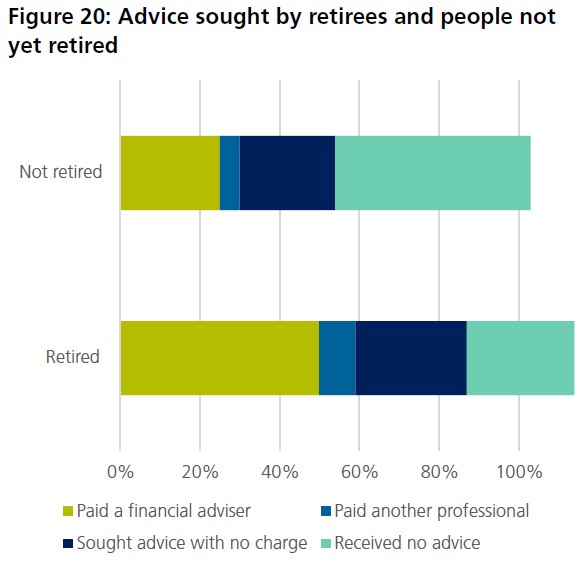
And as their mindset shifts from saving to spending, many are still looking for guidance and advice to help navigate the decades of retirement.
Three quarters of retirees (73%) and more than half of pre-retirees (51%) reported that they had previously received financial advice – paid or unpaid. Of these, 55% of retirees, and a staggering 71% of pre-retirees, felt there were other new topics worth getting advice or guidance on.
For those who had never sought help or advice, 48% of retirees and 78% of pre-retirees could nominate a topic they wanted support with.
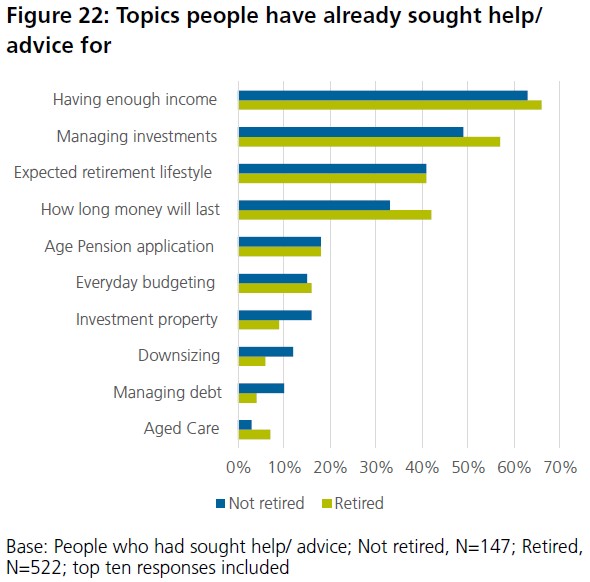
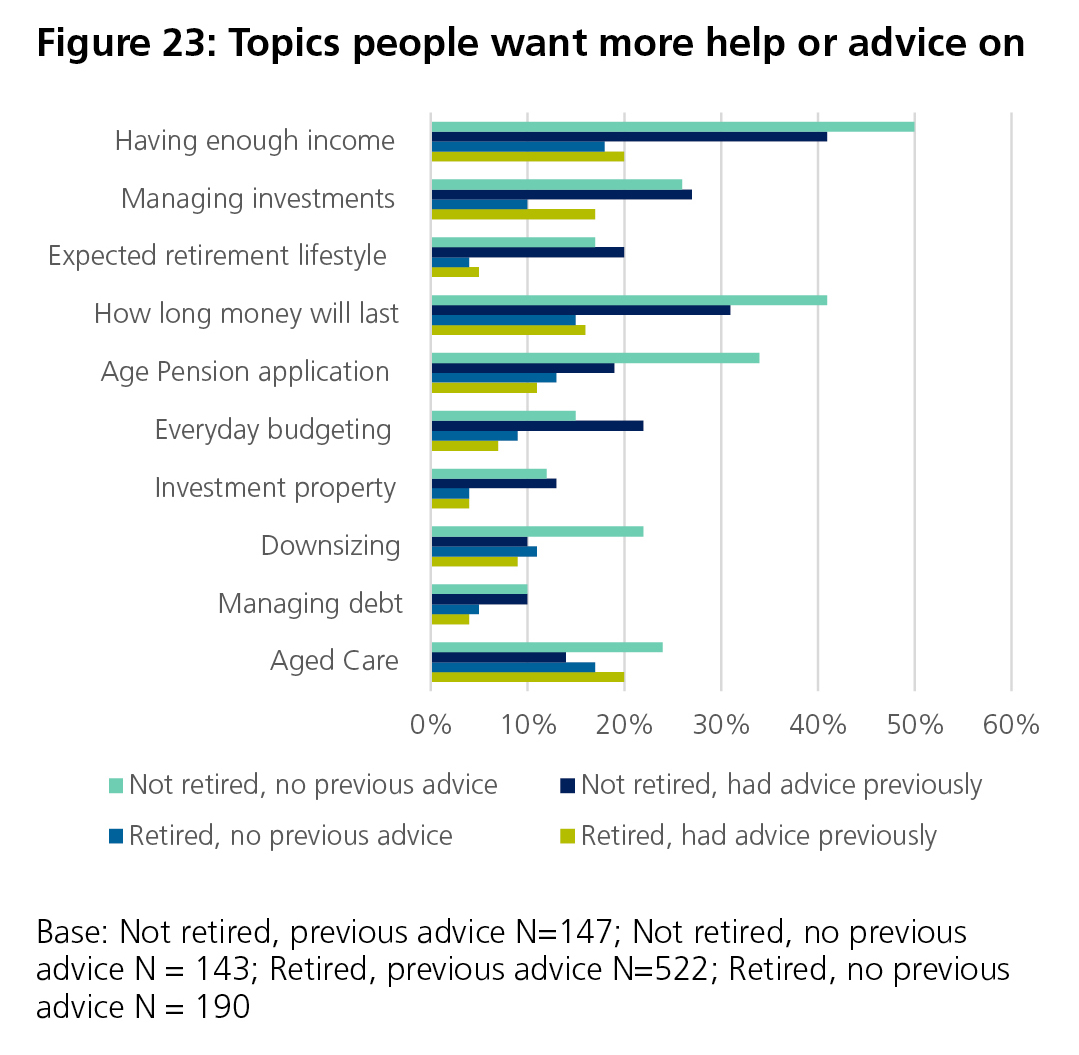
The lesson for retirees, and their advisers, is to reframe retirement conversations around lifestyle preferences rather than balances.
Five takeaways for retirees and their advisers
Here are my five key takeaways from my discussions with today’s older Australians:
- The right mindset makes all the difference: having the freedom to choose what you spend your money on is what retirement is all about. Spending is the new saving when you are retired.
- Avoid the spending guessing game: understand the retirement lifestyle that you want to have, not feel you should have. What persona are you? And your partner?
- Control in retirement is not just about how much money you have: it is turning your retirement savings into the lifestyle that you have chosen.
- Spending patterns and priorities are not static: they change over the retirement lifecycle, meaning that retirees need to be flexible and adapt to circumstances as they arise.
- The need for guidance and advice: this continues as retirees make decisions about how to balance living well today with preparing for tomorrow.
Retirement is not simply a phase of life. It is a dynamic, constantly changing lifecycle that requires consistent care and attention. My hope is that this research will help more Australians realise that confidence, choice, and control are not solely reliant on your superannuation balance. Embracing a positive retirement mindset can have a profound impact, especially for those who may be ‘under-retiring’.
About the research
The research was designed and conducted in partnership with Challenger through an online survey of 1,011 people from 7 April to 24 April 2026. The participants were sourced from Ovation, evenly split by gender and from a nationally representative sample but all:
- Were aged between 60 and 80
- Had at least $100,000 in superannuation.
The research was conducted in accordance with ISO 20252 and with the Research Society Code of Professional Behaviour.
Susan Bell is the Founder and Lead Researcher at Susan Bell Research, a corporate partner of the Research Society that specialises in research on the new lives of older Australians - a demographic that's wildly diverse, rapidly evolving and too often misunderstood. Over the last 30 years, the agency has conducted qualitative and survey research for many of Australia's largest financial services organisations and regulators. Susan Bell is a Fellow of the Research Society, and past Board Director.