Register For Our Mailing List

Register to receive our free weekly newsletter including editorials.

Home / 689

Stagnation might be OK at this point

We have frequently commented on the lack of ambition in Australia, the poor productivity, the flawed policy settings and the slow creep into mediocrity. In our view, nothing on that front has changed. If anything, it has become even more entrenched.

Notwithstanding those somewhat ‘sanguine’ thoughts, it’s worth noting that the composition of the Australian equity market (ASX 200) actually maps very differently to that of the domestic economy. Conveniently (and this won’t always be the case) the sectors under the greatest amount of pressure in the economy are under-represented on the stock market.

By way of example:

The consumer (under-represented) – the Australian consumer is under extreme pressure (i.e. high interest rates, inflation, energy prices, falling property prices, miserable confidence) and it likely already feels like a 'consumer recession' for many. The sector is 52% of GDP, but represents less than 10% of the ASX 200 (by market capitalisation). In fact, BHP is more important to the ASX than all consumer-related stocks put together. Myer and David Jones might attract a lot of headlines, but neither company sits inside the ASX 200.

Housing construction (under-represented) – the sector is consistently between 3-6% of GDP and heading into a policy-induced slump, but conveniently the building materials sector is less than 1% of the ASX 200. The transmission of a weak housing market (i.e. falling prices and volumes) is pretty limited through the ASX 200 outside of what it means for Consumer stocks. It will crimp Bank credit growth (we still believe mortgage credit quality is robust), but is unlikely to create a banking crisis.

Offshore education and tourism (under-represented) – Australia's #2 and #3 exports are under severe pressure and that will be further compounded by migration cuts (particularly in university education), but these two sectors are barely present on the ASX (<1%).

Mining and energy (over-represented) – while clearly important to the economy at 13% of GDP, these sectors are twice as important to the market at almost 30% of the ASX 200. We believe the general outlook is promising, with demand resilient, supply constrained and capex inflation/delays favouring incumbent low-cost producers (which Australia is spoilt with).

Financial services (over-represented) – the outlook for Australian banks is uninspiring but not dangerous, meanwhile the insurers look completely boring. They currently represent 30% of the ASX 200 vs. <10% of the economy which could prove to be a distinct advantage.

Australian companies with material offshore earnings (over-represented) – these businesses clearly don’t feature in GDP numbers but are north of 20% of the ASX 200 (e.g. ResMed, CSL, QBE Insurance). Overall, they have promising prospects and the potential to outgrow Australia's mediocre short-term prospects.

Data centres and AI (not relevant) – clearly a raging debate has emerged around the sector, with politicians oscillating between its virtues and evils (sometimes even on the same day). In any event, even if you round up, its directly listed cohort represents less than 1% of the ASX 200.

In a world where wars rage, French bond yields are literally melting up, 'revolutionary' business models like neoclouds look broken and real fragility has crept into AI stocks (the world’s most crowded trade), Australian equities could look like a port in a storm. It’s clearly a tactical rather than structural argument, but one which could carry some weight amongst global asset allocators in the period ahead. Being underweight Australia has been consensus – it’s easy and somewhat obvious – but that might now change.

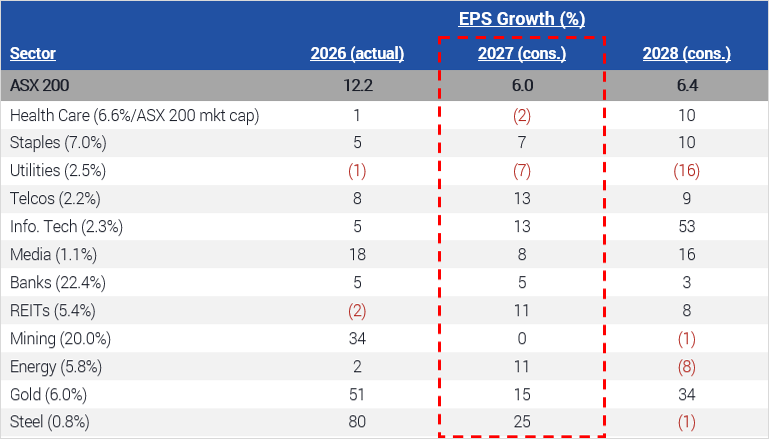
The key driver of the ASX's underperformance versus global markets has been its under-representation in IT hardware/AI and earnings stagnation. However, these factors may actually be a catalyst for outperformance if the stress we are currently observing persists or accelerates. It comes as the ASX 200 is approaching fair value and realistic F27 earnings expectations are in place (refer below).

Chart 1: The ASX 200 is approaching fair value
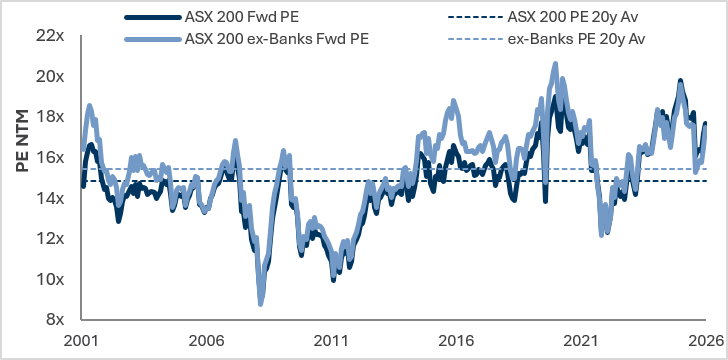
Table 1: Realistic F27 earnings expectations are in place
 

Dion Hershan is Head of Australian Equities at Yarra Capital Management, a sponsor of Firstlinks. This article contains general financial information only. It has been prepared without taking into account your personal objectives, financial situation or particular needs.

For more articles and papers from Yarra Capital, please click here.


  •   18 November 2026
  •      
  •   


Leave a Comment:

RELATED ARTICLES

ASX200 'handbrake' means passive investors could miss out

The tech sector is in vogue, but look elsewhere for value

Why equal weighting resolves Australian index skews

banner

Most viewed in recent weeks

Division 296: the initial moves to make before the windows close

What if the best superannuation strategy isn't about earning more, but acting before your options disappear? Several overlooked planning windows are narrowing, with consequences that can last for decades.

The retirement scorecard: how many of these questions can you answer?

From the maths of retirement, estimating spending and picking the right asset allocation to survive a poor decade, here are the questions every retiree – current or future – should be able to answer for themselves.

Testamentary trusts: Treasury has picked the wrong reading

A decades-old estate planning tool has survived one tax crackdown only to be caught by another. The surprise isn't who the reform is targeting, but who could end up paying the price for drafting choices made years ago.

Superannuation’s structural failings

Politicians are fighting over access to super, but they may be arguing about the wrong thing. The system’s three fundamental flaws have been hiding in plain sight for decades, costing Australians far more than they realise.

Avoid unnecessary CGT with this estate planning clause

A simple estate plan can create a ticking time bomb. One overlooked clause can pit spouses against children, delay inheritances, and potentially leave a family facing an unexpected tax bill worth hundreds of thousands of dollars.

Does an American retirement rule work for Australians?

The 4% rule has survived decades of scrutiny, but Australia's retirement system changes the equation in ways most overlook. Before accepting or rejecting this rule of thumb, it pays to understand what really drives retirement outcomes.

Latest Updates

Superannuation

Bill Kelty: Super can't solve everyone's problems

One of the key figures behind Australia’s superannuation system reflects on how it began, what has changed, and why some of today’s biggest debates may be asking too much of a retirement savings system.

Investment strategies

Rising yields have put bonds back in business

For the past decade, investors were forced to chase income wherever they could find it. With yields now offering competition to dividends, the new challenge is deciding whether they're still being adequately rewarded for risk.

Strategy

Do you want a bucket with that?

Retirees, advisers and super funds all talk about the bucket strategy as if it's one thing. It's not. The differences can be significant, and some may matter far more than investors realise when markets become volatile.

Investment strategies

What The Odyssey can teach us about valuation discipline

Investment temptations are hard to resist in the moment, but successful investing is not about ignoring compelling opportunities or ideas. For value investors, the smart move is to prepare before momentum clouds judgement.

Shares

Does market concentration really mean more risk for investors?

One of the most closely watched trends in global markets has become a growing source of investor concern in recent years. Whether that concern is justified, however, turns out to be a far more complicated question.

Retirement

Retirement in reality - 8 months in

Health goals, new friendships and lingering questions about identity have dominated this month. The experience has challenged widely held beliefs about purpose, belonging and what it really means to leave work behind.

Shares

Stagnation might be OK at this point

Australia's economic problems are hardly a secret. The more interesting question for investors is whether the stock market is as exposed to those problems as commonly assumed, or whether the picture is more nuanced.

Sponsors

Alliances

  • ASA-Logo-RGB-ActiveGreen-web.png

© 2026 Morningstar, Inc. All rights reserved.

Disclaimer
The data, research and opinions provided here are for information purposes; are not an offer to buy or sell a security; and are not warranted to be correct, complete or accurate. Morningstar, its affiliates, and third-party content providers are not responsible for any investment decisions, damages or losses resulting from, or related to, the data and analyses or their use. To the extent any content is general advice, it has been prepared for clients of Morningstar Australasia Pty Ltd (ABN: 95 090 665 544, AFSL: 240892), without reference to your financial objectives, situation or needs. For more information refer to our Financial Services Guide. You should consider the advice in light of these matters and if applicable, the relevant Product Disclosure Statement before making any decision to invest. Past performance does not necessarily indicate a financial product’s future performance. To obtain advice tailored to your situation, contact a professional financial adviser. Articles are current as at date of publication.
This website contains information and opinions provided by third parties. Inclusion of this information does not necessarily represent Morningstar’s positions, strategies or opinions and should not be considered an endorsement by Morningstar.