For whom the bell tolls
John Donne's famous line, later borrowed by Hemingway, is usually remembered as a meditation on death. What is often forgotten is that it was also a meditation on attention.
Historically, church bells functioned as a mass-communication system to announce any form of breaking news. Whether it was a birth, death, emergency or new arrivals, the bell rang because something had happened that the community needed to know. Recently, it has felt as though bells have been sounding from every quarter.
Nvidia, now down 25% over the past month, has prompted a different set of questions than investors have become accustomed to asking. At the same time, political developments in the United States suggest that public enthusiasm for an AI-driven future may be less unanimous than markets have assumed.
Markets have always produced enough controversies to fill a newsroom and to no one's surprise, politics remains an endless theatre of ambition and disappointment. However, there are moments when seemingly unrelated stories start to appear like fragments of a larger one.
The mood of the past few years in markets has been one of confidence, gradually morphing into a sense of inevitability. Investors will know the prevailing narrative well. AI will transform the economy, Nvidia will supply the picks and shovels and the hyperscalers are willing to spend whatever necessary to secure their advantage. Eventually, these immense expenses will all be justified by significant productivity gains. Investors may disagree on valuations, timelines and beneficiaries, but far fewer question the direction itself. The trouble often begins when a hypothesis ceases to be questioned.
None of this is to suggest that artificial intelligence is a passing fad. I find that history offers very little support for that conclusion. The internet transformed modern life so completely that I often struggle to imagine a world in which accessing information required patience.
In this sense, the technology itself was rarely the source of the misunderstanding. Rather, investors consistently struggled to distinguish between a revolutionary innovation and a sound investment. The former is usually much more obvious.
What strikes me as most interesting is not the technology itself, but the behaviour surrounding it. One of the more curious developments has been the increasingly frantic search for capital across the AI ecosystem. Though funding remains abundant, the appetite for capital simply continues to expand.
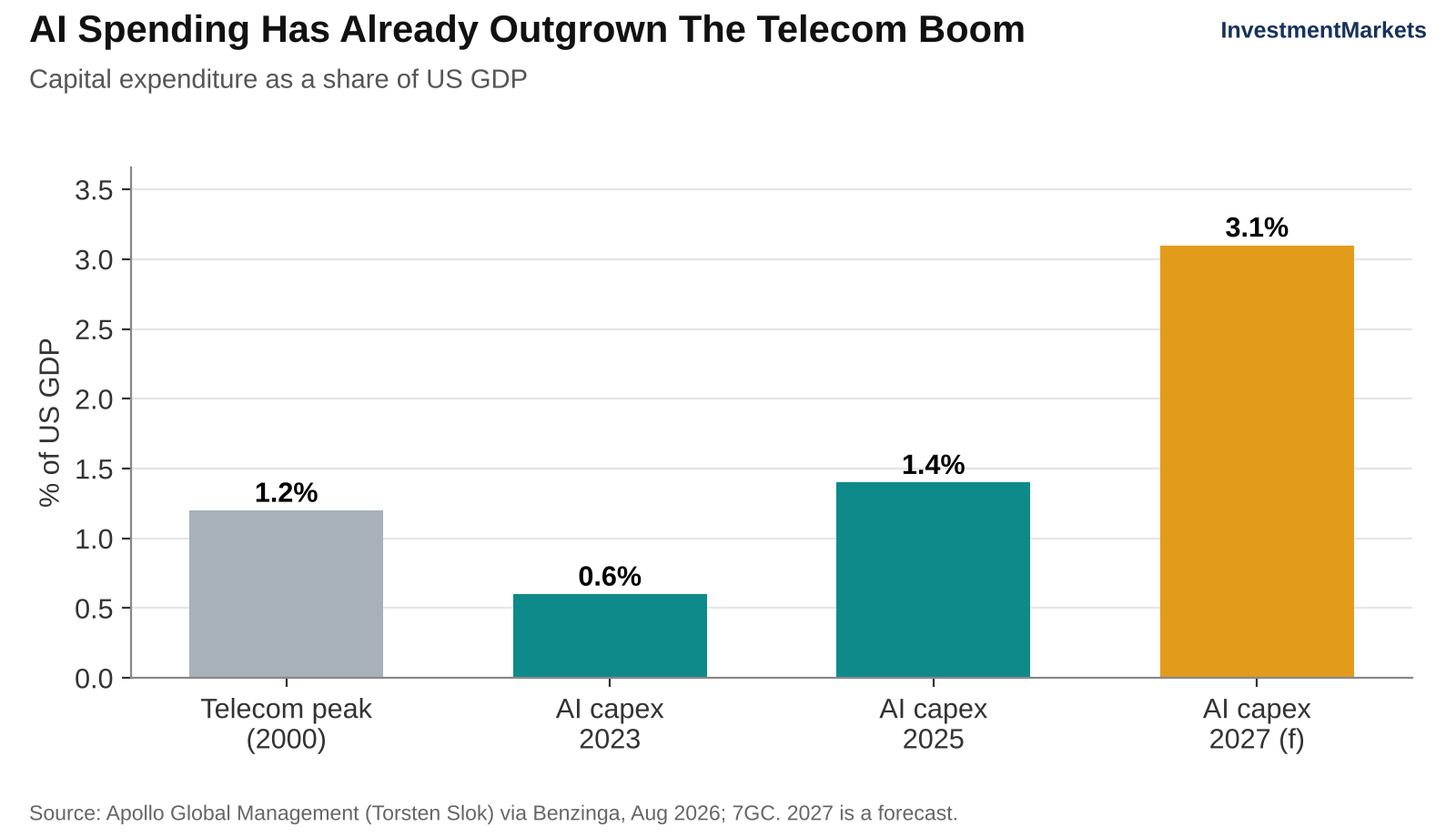
Against that backdrop, the growing enthusiasm around public listings feels noteworthy. Such events are often treated as milestones of ambition and the natural progression of successful companies. Often they are. Yet I cannot help wondering whether some of the recent manoeuvring in the industry reflects confidence or concern. Things are not always as romantic as they seem. Public markets have also historically functioned as a liquidity event for early investors and employees seeking an exit.
None of these developments constitute a crisis or entire collapse of conviction. I prefer to make observations rather than predictions. However, what these events collectively suggest is that the extraordinary confidence which has characterised recent years may no longer be quite as secure. Ultimately, that may be what the bells are signalling.
Donne understood that uncertainty has always been a communal experience. Investors (despite their frequent attempts to convince themselves otherwise) remain part of a similar community.
Simonelle Mody
***
Weekend Market Update
From Shane Oliver, AMP
Global shares mostly rose over the last week led by a strong gain in US shares of nearly 2.5% helped by strong earnings, lower oil prices and dip buyers offsetting another bad US inflation report and the slump in Nvidia shares which weighed later in the week as its CEO departed. For the week US shares rose 2.5%, Eurozone shares gained 3.1% and Japanese shares rose 6.5%, but Chinese shares fell 0.9%. Australian shares also rose by 0.7% led by energy, industrial, IT and telco shares.
Gold, Bitcoin, metal and iron ore prices along with the Australian dollar all fell over the last week, not helped by a solid rise in the US dollar on the back of increased expectations for Fed hikes after higher-than-expected US inflation data. Oil prices intially fell further on the back of President Trump’s comment that signficant strikes on Iran were highly unlikely and on peace talk hopes but then bounced slighly as Trump said that the US does not need a deal with Iran. This would then leave ongoing uncertainty about the Strait of Hormuz and Iran’s nuclear program. The risk of another spike higher in oil prices remains high.
The fall in oil prices over the last two weeks though has seen Australian petrol prices fall around 20 cents a litre – but they remain high.
Bond yields rose over the last week on the back of ongoing inflation worries after the hot US inflation report fuelled expectations for more central bank rate hikes. The longer-term risks for bond yields remain on the upside though thanks to a combination of: the oil shock; central bank rate hikes; concerns that maybe the neutral short-term rate has moved up; worries about big budget deficits; corporate borrowing to fund data centre investment; and a rising trend in Japanese bond yields leading to a reversal of the so-called carry trade.
The risk of a correction in shares remains high with lots of things to worry about including: high and sticky inflation; the likelihood of more central bank rate hikes; excessive public debt; a rising long term trend in bond yields; AI bubble fears; concerns about more regulation and higher taxes after the US midterms; and slowing growth and rising rates in Australia.
However, despite the issues around the outcome of the midterms, another month of high US inflation driving expectations for more Fed rate hikes shares and a slump in Nvidia shares on the back of the replacement of Jensen Huang as its CEO, shares have proven quite resilient with US shares just around 3% below their record high and even Australian shares only around 2% below their record high. So why are they so resilient? There are likely several reasons for this resiliency: despite some disappointments US earnings growth is very strong running at 32%yoy – tech remains a star performer but much of the upside surprise has been in ex tech and energy; strong earnings growth outside tech is supporting a rotation trade in US shares away from tech shares; recession risks globally are still low; price to earnings ratios are actually down from last year’s highs – see the next chart; regulatory fears regarding AI data centres are probably overdone as they can be located in states with less regulation and many were moving to their own renewable energy sources anyway; and in Australia softer data has come with the silver lining of a reduced risk of further RBA rate hikes. Compared to the US tech boom peak in 1999/2000 the forward PE is lower today and falling faster, earnings growth is stronger today particularly tech sector earnings and there is less of a sense of euphoria today.
What about Jensen Huang leaving Nvidia as CEO? Analysis by North American research house BCA of unexpected CEO departures at major US companies show a meaningful impact on the company when legal and ethical issues are involved, but less so for the sector and no real impact on the broader market. The complication for Nvidia is that its at the centre of the AI boom, is 6% of the US share market and Jensen Huang has been CEO for 33 years having been a co-founder. It’s unlikely to impact its near-term earnings but could leave it vulnerable should its earnings report disappoint next Tuesday. The issue could also lead to a tightening in US rules around computer chip sales to China which could threaten the US-China trade truce ahead of the coming week’s summit between President’s Xi and Trump.
Meanwhile, Anthropic is due to list next Thursday following a record IPO of up to $US90bn. IPOs can engender enthusiasm for a theme and stock which can carry over to the share price immediately after listing. But they also have a mixed track record of delivering for investors, particularly beyond any initial spike as existing investors exit and any excitement can inflate valuations. The greater the hype often the worse the post listing performance. AI comes with greater than normal uncertainty as while longer term demand is likely assured the provision of AI tools could prove very competitive as it lacks the sort of network effects that locked users into particular social media providers.
In Australia, a further fall in consumer confidence and in business confidence and conditions in data released in the last week along with increasing reports of corporate job layoffs and rising levels of mortgage stress and arrears add to evidence that RBA rate hikes along with other things are working to cool demand which should take pressure off inflation. As such, our view remains that the RBA has done enough and rates will be on hold ahead of rate cuts late next year. The Australian money market now sees only a 4% chance of a November hike, 25% chance of another hike (both of which may be a bit too low) and has a first cut 61% priced in by December next year.
Another spike in announced corporate layoffs is worth watching. In the last few month this includes NAB (around 2500), Qantas (850), Rio (900), BHP (300), KPMG (387) and likely David Jones following the closure of half its stores (say half its 6000 employees). So far, the layoff numbers are low relative to average jobs growth of around 15,000 each month, but it may be another sign that the labour market is cooling down.
Also in this week's edition...
Retirees can be reluctant to draw on their savings due to fear of running out. David Bell and Geoff Warren propose an additional retirement savings account that Australia should have.
The Democrats have regained control of Congress and shifted the equation in Washington. Shane Oliver returns to discuss the implications of the US midterm results for investors.
A reader's query about the recent CGT reforms has raised a bigger issue. Tony Dillions asks whether policymakers are forgetting to reward investors for taking on risk.
Rising yields have made bonds attractive again, but the team at Fidelity Australia argue that the role they play in a portfolio has become more complicated.
Signs of a recovery are emerging for dividend investors. Marc Jocum explores the important trade-off that investors face when seeking yield and building reliable income.
The market has delivered some of the strongest returns have arrived when the outlook seemed least attractive. Jason Teh explains why 'overvalued' has been such an expensive word for portfolios.
Investor obsession with AI is attracting unprecedented amounts of capital and confidence. Satyajit Das questions whether the enthusiasm is a good kind of bubble or simply a bubble.
Curated by Simonelle Mody and Leisa Bell
Latest updates
PDF version of Firstlinks Newsletter
Monthly Gold ETF Flows from World Gold Council
Monthly Bond and Hybrid updates from ASX
Monthly Investment Products update from ASX
Listed Investment Company (LIC) Indicative NTA Report from Bell Potter
Plus updates and announcements on the Sponsor Noticeboard on our website