As most of us enjoy some time off, our team at UniSuper have once again compiled their book recommendations for the summer break. From leadership to investing and happiness and wellbeing, we hope you’ll find something here that inspires fresh ideas and thinking over the holiday period. Please join the conversation and add your favourites below.
Andrew Gregory, Chief Advice Officer
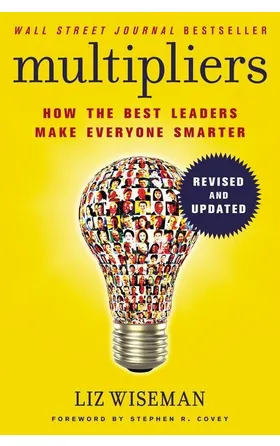 Multipliers: How the Best Leaders Make Everyone Smarter by Liz Wiseman
I picked this up expecting another leadership book and ended up thinking about my own habits more than I expected. Wiseman draws a sharp line between leaders who unintentionally shut people down and those who create the conditions for others to think harder, stretch further, and do their best work. The thing that stuck with me is how often “Diminishing” happens accidentally. Good intent, bad impact. And on the flip side, “Multipliers” aren’t flashy; they just consistently bring curiosity, clarity, and trust into the room.
Her examples are practical enough that you can see yourself in them, which is equal parts helpful and uncomfortable. But it’s a useful reminder that our job isn’t to be the smartest person at the table. It’s to build an environment where our teams feel capable, energised, and supported to do great work.
Key takeaway: Real leadership is less about having the answers and more about creating space for others to think and contribute at their best.
James Ewinger, Investments - Equities
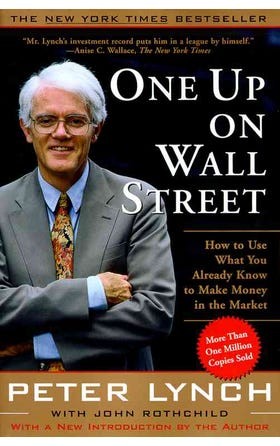 One Up on Wall Street by Peter Lynch
One Up on Wall Street is an engaging and practical guide for anyone keen on learning more about stock market investing. Peter Lynch breaks down complex investment concepts, encouraging readers to trust their own observations and invest in what they know. The book is packed with real-life examples and entertaining anecdotes making it an easy read.
Personally, I like how Lynch divides investments into several distinct groups—such as slow growers, stalwarts, fast growers, cyclicals, turnarounds, and asset plays—each with specific traits and suggested approaches. His timeless advice—like “invest in what you know” and focus on company fundamentals enables a deeper, more practical understanding of stock investing.
Jodie Barns, Investments - ESG
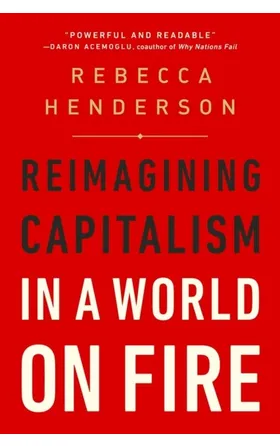 Reimagining Capitalism in a World on Fire by Rebecca M. Henderson
Generally, my reading choices are a lot like my travel destinations — I gravitate to places and stories that make me think differently about the world, teach me something new, and deliver a bit of culture shock along the way. And while I wouldn’t ordinarily reach for a finance-related book in summer, given my role in ESG and investments, it feels right to lean into the trend rather than escape from it.
Reimagining Capitalism in a World on Fire is the perfect bridge: a book that stretches your thinking without feeling like work. Rebecca Henderson takes the familiar terrain of markets and capitalism and reframes it entirely, showing how our economic system is colliding with climate risk, inequality, and institutional pressure — and what it will take to rebuild it for a more sustainable future.
What makes it a standout summer read is its tone: practical, hopeful, grounded in real-world examples, and surprisingly energising. It’s the kind of book that resets your perspective, sharpens how you think about your work, and leaves you seeing opportunities where others see roadblocks.
If you want something that expands your world view while still being engaging enough for long afternoons, this one earns a spot on the list.
Renae Anderson, Member Education and Advice
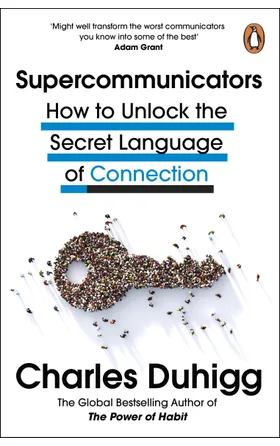 Supercommunicators by Charles Duhigg
Charles Duhigg’s book, Supercommunicators, explores what makes some conversations transformative while others fall flat. Drawing on psychology and neuroscience, Duhigg argues that effective communication begins with recognising the type of conversation we’re in, whether its practical (what’s the problem), emotional (how do we feel), or social (who are we to each other). He offers tools for asking better questions, listening for underlying needs, and aligning our responses to the real issue beneath the surface.
For financial advisers, his framework is especially relevant: it helps us move beyond numbers to understand clients’ values, fears, and aspirations, and to navigate difficult discussions with more empathy and clarity. The book provides a research-backed playbook for building trust, resolving conflict, and creating more honest, productive dialogue in both professional and personal settings. One key learning was about the 36 questions created by Arthur Aron. How might these questions help you prepare your clients for their best retirement?
Benedict Davies, Public Policy
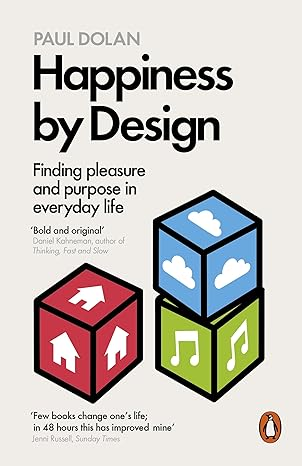 Happiness by Design: Finding Pleasure and Purpose in Everyday Life by Paul Dolan
Paul Dolan is a Professor of Behavioural Science at the London School of Economics, known for his extensive work in health economics, wellbeing and happiness research, including collaborations with Daniel Kahneman.
In Happiness by Design, Dolan distils years of research into his pleasure and purpose principle: that happiness depends on how we allocate our attention between experiences that bring pleasure and those that bring purpose. His central argument is that what matters is what we pay attention to, so we should redesign our environments, habits and routines so that our attention naturally falls on activities that reliably provide either enjoyable feelings or meaningful engagement—or ideally a balance of both.
I’m particularly interested in this research because the objective of superannuation—striving for a dignified retirement—rests on strong wellbeing concepts. Dolan’s book can be read alongside the financial wellbeing literature, which itself relies on conceptions of financial security and wellbeing that, arguably, create the conditions for attention to shift towards activities that bring pleasure and purpose in everyday life.
Happy New Year, and we look forward to sharing more insights over the coming months.
UniSuper is a sponsor of Firstlinks. For more articles and papers from UniSuper, click here.