We have only a short time left to the end of the financial year to get our SMSF or other super funds in order and ensure we are making the most of the strategies available to us. Here is a checklist of the most important issues that you should address with your advisers before the year-end.
Get this wrong and your SMSF could lose tax exemptions, trigger penalties, or lock in avoidable tax.
Warning before we begin
You need to check your personal super balances, contribution limits, caps and tax position before implementing any of these strategies as your own particular circumstances may warrant alternative options.
Also, confirm your annual return lodgement status by logging in to ATO online services. A fund with an overdue return faces penalties, potential interest charges, and likely removal from the Super Fund Lookup register. This can interrupt employer contributions and serious consequences under Pay Day Super requirements for your employer.
1. It's all about timing
If you are making a contribution, the funds must hit the super fund's bank account by the close of business on 30 June. Some clearing houses hold on to money before presenting them to the super fund. Some Retail and Industry funds are asking for funds to be contributed by the 18th-19th June!
In addition, pension payments must leave the account by the close of business unless paid by cheque in which case the cheques must be presented within a few days of the EOFY. There must have been sufficient funds in the bank account to support the payment of the cheques on 30 June, but a cheque should be your very last-minute option!
Get your payments in by Monday 22 June or earlier, as the 30th is a Tuesday this year. This is even more important if using a clearing house for contributions.
2. Review your Concessional Contributions (CC) options
The 2025–26 concessional cap is $30,000. This includes all employer contributions, bonuses, salary sacrifice, premiums for insurance in super, and any personal deductible contributions. Log in to ATO online services via myGov and confirm your year-to-date total before making any further contributions.
You have the ability to make CCs up to age 67 even if not working and to 75 if you meet the Work Test . This is important for those who have retired but may have sold a property or shares and triggered a large capital gain during the year. Do not exceed your limit unless you have Unused Carried Forward Concessional limits and Total Super Balance under $500,000 as of last 1 July 2025. Guidance on how to check your Unused Carried Forward Concessional limits via MyGov records available here.
3. Consider using the ‘Unused Carry Forward Concessional Contribution’ limits
Broadly, the carry forward rule allows individuals to make additional CCs in a financial year by utilising unused CC cap amounts from up to five previous financial years. Eligibility requires a total superannuation balance just before the start of that financial year of less than $500,000 (across all your super accounts).
This measure applies from 2020-21 so effectively, this means an individual can make up to $167,500 of CCs in a single financial year just by utilising unapplied unused CC caps since 1 July 2020 plus this year's limit. This is the last year to use any 2020-21 unused CCs as they fall outside the 5-year window after 30 June 2026.
Beware that once your income (including salary, investment income, employer SGC, and personal concessional contributions) goes over $250,000 you will be subject to Div 293 Tax.
TIP: The Super Guarantee remains at 12% but the Concessional limit will rise to $32,500 from 1 July 2026. Re-evaluate your contribution plans for 2026-27.
4. Review plans for Non-Concessional Contributions (NCC) options
The 2025–26 non-concessional cap is $120,000 per year or $360,000 under the 3-year Bring Forward Rule.
Even up spouse balances and maximise super in pension phase up to age 75. Couples where one spouse has exhausted their Transfer Balance Cap (TBC) and has excess amounts in accumulation (or above $3m, or even the $10m threshold) are able to withdraw and recontribute to the other spouse who has TBC space available to commence a retirement phase income stream. This can increase the tax efficiency of the couple’s retirement assets as more of their savings are in the tax-free pension phase environment and may help minimise Div 296 Tax.
TIP: From 1 July 2026 the NCC will rise to $130,000 per year or $390,000 under the 3-year Bring Forward Rule. If you have considerable additional funds to contribute then maybe contribute up to $120,000 before June 30 and then you may be able to contribute up to $390,000 after 1 July to maximise contributions.
5. Recontribution strategies
Make your tax components more tax free by using recontribution strategies. SMSF members can cash out their existing super and re-contribute (subject to their contribution caps) them back into the fund to help reduce tax payable from any super death benefits left to non-tax dependants. From 1 July 2022 you can do this until age 75 (contribution to be made within 28 days after the end of the month you turn 75).
Consider doing the drawdown before 30th June so that your TBC and Total Super Balance (TSB) on 1st July 2026 gets some additional space with the rise in the TBAR and TSB full limits to $2.1 million. Note that if you had an existing pension(s) at 30th June 2025 your current TBC limit will be anywhere between $1.6 million and $2.1 million after 1 July (frustrating for advisers, so check your MyGov records).
6. Downsizer contributions
If you sell your home and you are over 55, consider eligibility for downsizer contributions. It allows individuals to make a one-off, post-tax contribution to their superannuation of up to $300,000 per person from the proceeds of selling their home. But you must make your downsizer contribution within 90 days of receiving the proceeds of sale (usually the date of settlement). These contributions do not to count towards non-concessional contribution caps.
The $300,000 downsizer limit (or $600,000 for a couple) and the $360,000 bring forward NCC cap allow a single person to contribute up to $660,000 (or $1.32 million for a couple) in one year subject to their contributions caps.
TIP: Be careful as this is a once only strategy and if you would benefit more in later years using the strategy, then maximise NCCs first.
7. Calculate co-contributions
Check your eligibility for the co-contribution, it's a good way to boost your super. The amounts differ based on your income and personal super contributions, so use the super co-contribution calculator.
8. Examine spouse contributions
If your spouse has assessable income plus reportable fringe benefits totalling less than $37,000 for the full $540 tax offset or up to $40,000 for a partial offset, then consider making a spouse contribution. Check out the ATO guidance here.
You can implement this strategy up to age 75 as a Spouse Contribution is treated as a NCC by your spouse (and therefore counted towards your spouse’s NCC cap).
Consider splitting contributions with your spouse, especially if:
- your family has one main income earner with a substantially higher balance or
- if there is an age difference where you can get funds into pension phase earlier or
- if you can improve your eligibility for concession cards or age pension by retaining funds in superannuation in the younger spouse’s name.
This is a simple no-cost strategy I recommend for everyone here.
9. Give notice of intent to claim a deduction for contributions
If you are planning to claim a tax deduction for personal concessional contributions, you must have a valid ‘notice of intent to claim or vary a deduction’ (NAT 71121).
A notice must be made before you commence the pension. Many people like to start their pension in June and avoid having to take a minimum pension in that financial year but make sure you have claimed your tax deduction first. The same notice requirement applies if you plan to take a lump sum withdrawal from your fund.
10. Act early on off-market share transfers
If you want to move any personal shareholdings, ETFs or Managed Funds into super (as a contribution) you should act early. The contract is only valid once the broker or fund manager receives a valid Off-Market Transfer form so timing in June is critical. There are likely to be brokerage costs involved. Some fund managers only price weekly/monthly/quarterly so check first. For unlisted managed funds you will also need a new Account Application with the Off Market Transfer form.
11. Review options on pension payments
Ensure you take the minimum pension based on your age-based rate. If a pension member has already taken pension payments of equal to or greater than the minimum amount, they are not required to take any further pension payments before 30th June 2026. For transition to retirement pensions, ensure you have not taken more than 10% of your opening account balance this financial year.
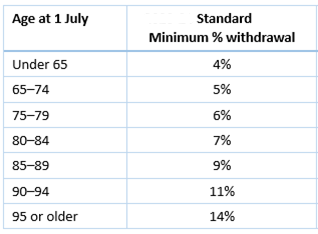
If a pension member has already taken more than the minimum pension for the year, they cannot change or sneak a payment back into the SMSF bank account (it would be treated as a new contribution!), but they can get organised for FY27.
If you need more pension payments for living expenses but have already taken the minimum, then it may be a good strategy for amounts above the minimum to be withdrawn as either:
- a partial lump commutation sum, creating a debit against the pension members transfer balance account (TBA). Please discuss this with your accountant and adviser first as all funds have to report these quarterly to the ATO.
- for those with both pension and accumulation accounts, a lump sum from the accumulation account to preserve as much in tax-exempt pension phase as possible.
TIP: Failure to pay minimum pensions just got a lot more costly. SMSF trustees, accountants and financial advisers should take note of significant changes to pension commencement rules that came into effect on 1 July 2025. These changes impact how pensions are treated for tax purposes if a minimum pension is missed and could have serious implications for retirement planning strategies. Read more detail here.
12. Check your documents on reversionary pensions
A reversionary pension to your spouse will provide them with up to 12 months to get their financial affairs organised before making a final decision on how to manage your death benefit.
Review your pension documentation and check if you have nominated a reversionary pension in the context of your family situation. This is especially important with blended families and children from previous marriages that may contest your current spouse’s rights to your assets. Also consider reversionary pensions for dependent disabled children.
The reversionary pension has become more important with the application of the $1.6 million - $2.1 million TBC limit to pension phase.
TIP: If you have opted for a nomination instead then check the existing Binding Death Benefit Nominations (many expire after 3 years) and look to upgrade to a Non-Lapsing Binding Death Benefit Nomination. Check your Deed allows for this first.
TIP: Under Division 296 Tax, the Reversionary Beneficiary’s TSB increases immediately, potentially triggering a 15% tax if their TSB exceeds $3m or up to 25% if above $10m at financial year-end. Beneficiaries must weigh the cost of this new tax against the benefits of tax-exempt pension income, while noting that converting to a non-reversionary pension requires careful review of the specific SMSF deed. Ultimately, this decision depends on the Reversionary Beneficiary’s individual financial position and broader estate planning goals.
13. Review Capital Gains Tax (CGT) on each investment
Review any capital gains made during the year and over the term you have held the asset and consider disposing of investments with unrealised losses to offset the gains made. If in pension phase, then consider triggering some capital gains regularly to avoid building up an unrealised gain that may be at risk to legislative changes.
Consider the Division 296 CGT cost base election for 30 June 2026. For SMSF trustees, the election to reset the cost base of assets to their 30 June 2026 market value is a critical one-time opportunity to shield pre-existing capital gains from the Division 296 tax.
Key considerations:
- “All-or-Nothing” election applies to every CGT asset held by the fund on 30 June 2026. Trustees cannot pick and choose; they must reset all assets or none.
- “Irrevocability and Purpose” election is irrevocable once made. This reset applies exclusively for Division 296 purposes. The fund’s standard CGT and income tax calculations still use the original acquisition cost.
- Impact of Unrealised Losses. If an asset’s market value on 30 June 2026 is lower than its original cost, resetting will lock in a lower cost base for Division 296 purposes. This could result in a larger Division 296 capital gain in the future if the asset recovers and is later sold.
Read more about this option on our LinkedIn post here
14. Collate records of all asset movements and decisions
Ensure all the fund's activities have been appropriately documented with minutes, and that all copies of all statements, valuations and schedules are on file for your accountant, administrator, and auditor.
The ATO has beefed up its requirements for what needs to be detailed in the SMSF Investment Strategy so review your investment strategy and ensure all investments have been made in accordance with it and the SMSF Trust Deed, including insurances for members. See my article on this subject here.
15. Arrange market valuations
Regulations require assets to be valued at market value each year, including property and collectibles. For more information refer to ATO’s publication Valuation guidelines for SMSFs. On collectibles, play by the rules that came into place on 1 July 2016 or remove them from your SMSF.
TIP: The ATO is targeting audit compliance this year on Property Valuations in SMSFs as we approach the implementation of the Division 296 Tax from 1 July 2026.
TIP: It would be better to ensure your properties truly match the market value on 1 July 2026 than to have a large rise in value recorded in future years that will trigger higher Div 296 Tax.
TIP: Do a 3-year deal with your Valuer! SMSF Auditors generally accept a full, independent property valuation every three years, provided that in the intervening years you can supply objective and supportable evidence to demonstrate that the property is still recorded at market value.
16. Check the ownership of all investments
Make sure the assets of the fund are held in the name of the trustees (including a corporate trustee) on behalf of the fund. Carefully check any online accounts and ensure all SMSF assets are separate from your other assets.
We recommend a corporate trustee to all clients. This might be a good time to change, as explained in this article on Why SMSFs should have a corporate trustee. If you have previously moved to a Corporate Trustee then double check all accounts/investments were changed to the name of this trustee.
17. Review estate planning and loss of mental capacity strategies
Review any Binding Death Benefit Nominations (BDBNs) to ensure they are valid and check the wording matches that required by the Trust Deed. Ensure it still accords with your wishes.
Also ensure you have appropriate Enduring Powers of Attorney (EPOAs) in place to allow someone to step into your place as trustee in the event of illness, mental incapacity or death. Ensure that your Power of Attorney is valid for the state you are in living in now if you have retired interstate. This article explains how it can all go wrong.
TIP: Check your Trust Deed and the details of the rules. For example, did you know you cannot leave money to stepchildren via a BDBN if their birthparent has pre-deceased you?
18. Review any SMSF loan arrangements
Have you provided special terms (low or no interest rates, capitalisation of interest etc) on a related party loan? Review your loan agreement and see if you need to amend your loan.
Have you made all the payments on your internal or third-party loans, have you looked at options on prepaying interest or fixing the rates while low?
Have you made sure all payments in regards to Limited Recourse Borrowing Arrangements (LRBAs) for the year were made through the SMSF trustee? If you bought a property using borrowing, has the Holding Trust been stamped by your state’s Office of State Revenue?
The current variable interest rate for related party LRBAs is 8.95%, but is due to be updated for FY2027 in late-May.
19. Ensure SuperStream obligations are met and be ready for PayDay Super
For super funds that receive employer contributions, the ATO enforces the use of SuperStream, whereby super contributions are made electronically.
From 1 July 2026, Pay Day Super legislation will apply. Is your SMSF bank account NPP Enabled? Read more here.
All funds should be able to receive the contributions same day using NPP and data electronically and you should obtain an Electronic Service Address (ESA) to receive contribution information. If you change jobs your new employers may ask SMSF members for their ESA, ABN and bank account details.
20. Ensure you are meeting your Quarterly TBAR (transfer balance account report) deadlines
All SMSFs are required to report events that affect a member's transfer balance account within 28 days after the end of the quarter in which the event occurs. If you are in Pension Phase then you need to be checking in with your accountant/administrator quarterly to ensure TBAR reporting is up to date.
Example: Any reportable events that occur between 1 April and 30 June 2025 must be reported by 28 July 2025. This means you cannot report at the same time as your SMSF annual return (SAR) for the 2025-26 income year. More info here.
21. ASIC fee increases
ASIC is increasing fees by $2 for the annual review of a special purpose SMSF trustee company to $67 (up from $65). Before 30 June, for $457 you can pre-pay the company fees for 10 years and lock in current prices with a decent discount. There is a remittance form linked here.
TIP: There are significant penalties if you miss a renewal. Late payment fees are $98 (under 1 month) and $411 (over 1 month).
22. Legacy retirement product conversions (seek expert advice)
On 7 December 2024, regulations came into effect to allow the commutation of legacy pensions for a limited 5-year period. There is considerable additional detail in this feature so consult an adviser if you are affected, especially to ensure you do not lose other entitlements such as the age pension.
The regulations allow a five-year timeframe for lifetime or life expectancy pensions and MLIS to be commuted.
You have the following options:
- withdraw the funds from superannuation (all these clients have previously met a condition of release)
- rollover the amount to accumulation phase, or
- use the funds to commence an account based pension (if transfer balance cap space is available).
Under this measure, if a lifetime or life expectancy pension is commuted, any reserve supporting that income stream is also added to the commutation value. However, no amount from the reserve is counted towards your NCC.
23. Relaxing residency requirements for SMSFs – HAS NOT PASSED
The Labor Government has failed to move on this issue. It appears lost in the ether!
SMSFs and small APRA funds still do not have relaxed residency requirements through the extension of the central management and control test safe harbour from two to five years as the LNP government failed to pass it before the last election and Labor have put it on the backburner. The active member test was also to be removed, allowing members who are temporarily absent to continue to contribute to their SMSF. So if you are heading overseas on an extended secondment or to live please review your options and here is a great guide to your options.
24. Home Equity Access Scheme (HEAS)
The Home Equity Access Scheme formerly called The Pension Loan Scheme, lets older Australians who are Age Pension age or older get a voluntary non-taxable loan from the Government.
- No negative equity guarantee - Borrowers under the HEAS, or their estate, will not owe more than the market value of the property secured against the loan, minus any other mortgages or legitimate encumbrances.
- Immediate access to lump sums under the HEAS - Eligible people will be able to access up to two lump sum advances in any 12-month period, up to a total value of 50% of the maximum annual rate of Age Pension (currently $15,611 for singles and $23,535 for couples).
25. Careful if replacing Income Protection or TPD Insurance (Total Permanent Disability)
Have you reviewed your insurances inside and outside of super? Don’t forget to check your current TPD policies owned by the fund with an own occupation definition as the rules changed a few years ago so be careful about replacing an existing policy as you may not be able to obtain this same cover inside super again.
There were major changes to Income Protection insurance in 2021 so be very careful about switching insurer unless costs have blown out as new cover is often vastly inferior to current covers. Read more here before switching cover.
26. Large one-off personal income or gain – Bring forward Concessional Contributions
For those who may have a large taxable income this year (large bonus or property sale) and are expecting a lower taxable income next year you should consider a contribution allocation strategy to maximise deductions for the current financial year by bringing some or all of your FY2027 limit forward to this year. This strategy is also known as a “Contributions Reserving” strategy, but the ATO is not a fan of Reserves so best to avoid that wording! Just call it an Allocated Contributions Holding Account. See my article on this strategy here.
27. Providing proof of cryptocurrency holdings as of 30 June
As of April 2026, cryptocurrency exchanges and custody platforms in Australia that meet specific asset thresholds are required to hold an Australian Financial Services Licence (AFSL) within 12 months. You should be using an exchange that is set up for SMSF accounts. They should provide a Tax Summary but it may cost extra. Some exchanges are now partnering with Specialised services that are experts in Australian to offer tax reports that meet Australian Audit requirements.
The auditor will also want to verify holdings by checking:
- An exchange account is set up in the name of the fund
- Wallet purchased using funds from the SMSFs cash account
Cold Wallet audit management extra step: For annual audit purposes, take a screenshot of the assets held in your Ledger wallet (e.g. via the Ledger ‘Live’ App or similar) on 30 June and also on the day you submit your paperwork and email this to the tax agent at tax time.
28. Non-arm’s length expenditure and income (NALE/NALI) rules
NALE/NALI applies in FY2026 (in the sense the ATO are going to enforce it) – please ensure that if members perform services for their SMSF which is their ‘day job’ (ie. Accounting work for Accountants, Building and repair work for tradies, etc) that these are charged at the appropriate commercial rate that they charge their clients. A good article explaining this in more detail here from ASF Audits.
Don’t leave it until after 30 June. Review your Self Managed Super Fund now and seek advice if in doubt about any matter.
Liam Shorte is a specialist SMSF adviser and Director of SONAS Wealth. He is also a Director of the SMSF Association and he writes under the social media identity of 'The SMSF Coach'. This article contains general information only and does not address the circumstances of any individual. It is based on an understanding of relevant legislation and rules at the time of writing, which may change.