My recent conversations with clients have become noticeably more negative on Australia.
It feels similar to the ‘mortgage cliff’ narrative of 2022 and 2023. The risks were spoken about constantly, but the most bearish outcomes did not materialise.
Here are 17 reasons Australia remains an attractive place to invest, and why the economy and markets will prove more resilient than current sentiment suggests.
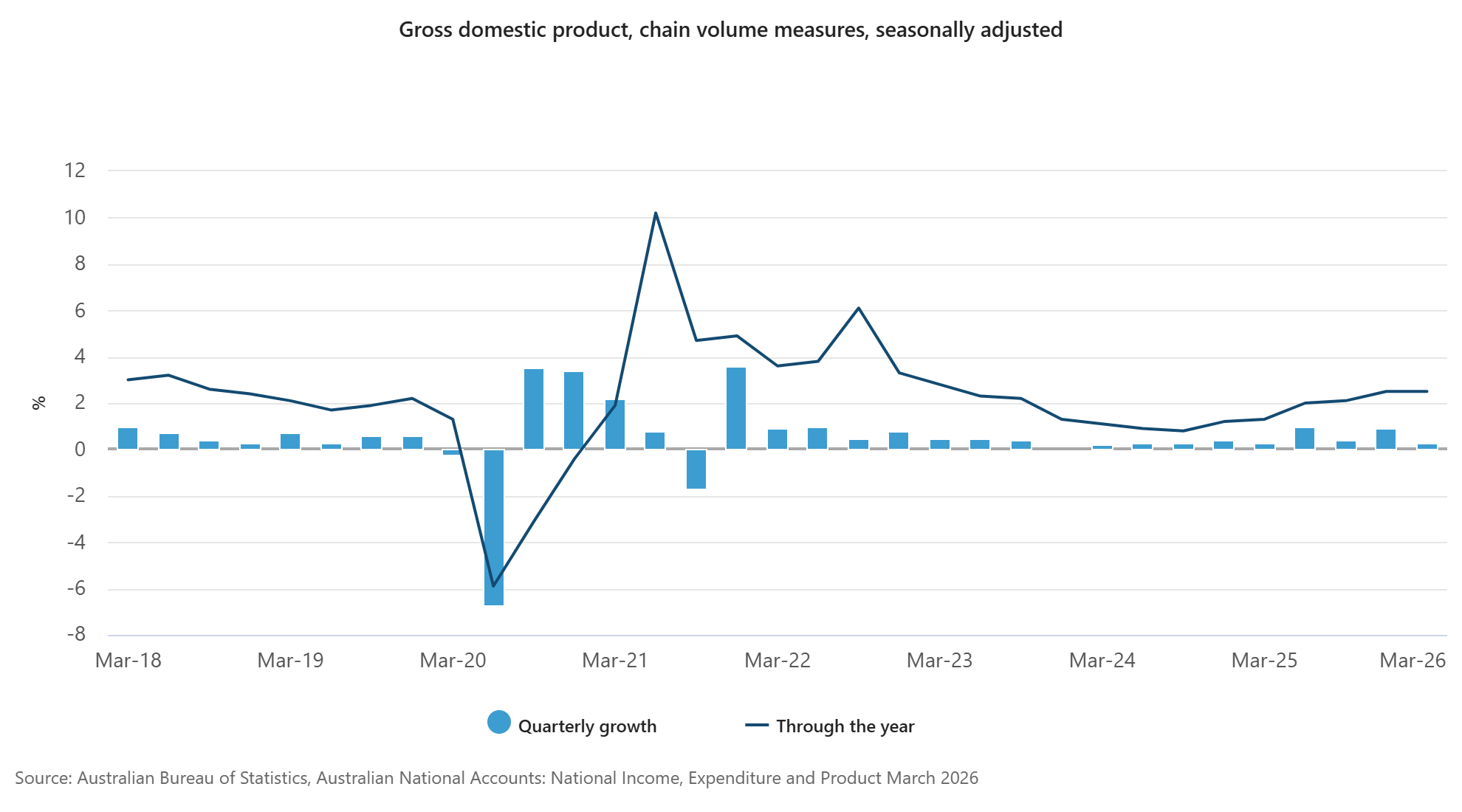
1. The economy is still expanding. Real GDP increased 2.5% over the year to March 2026.
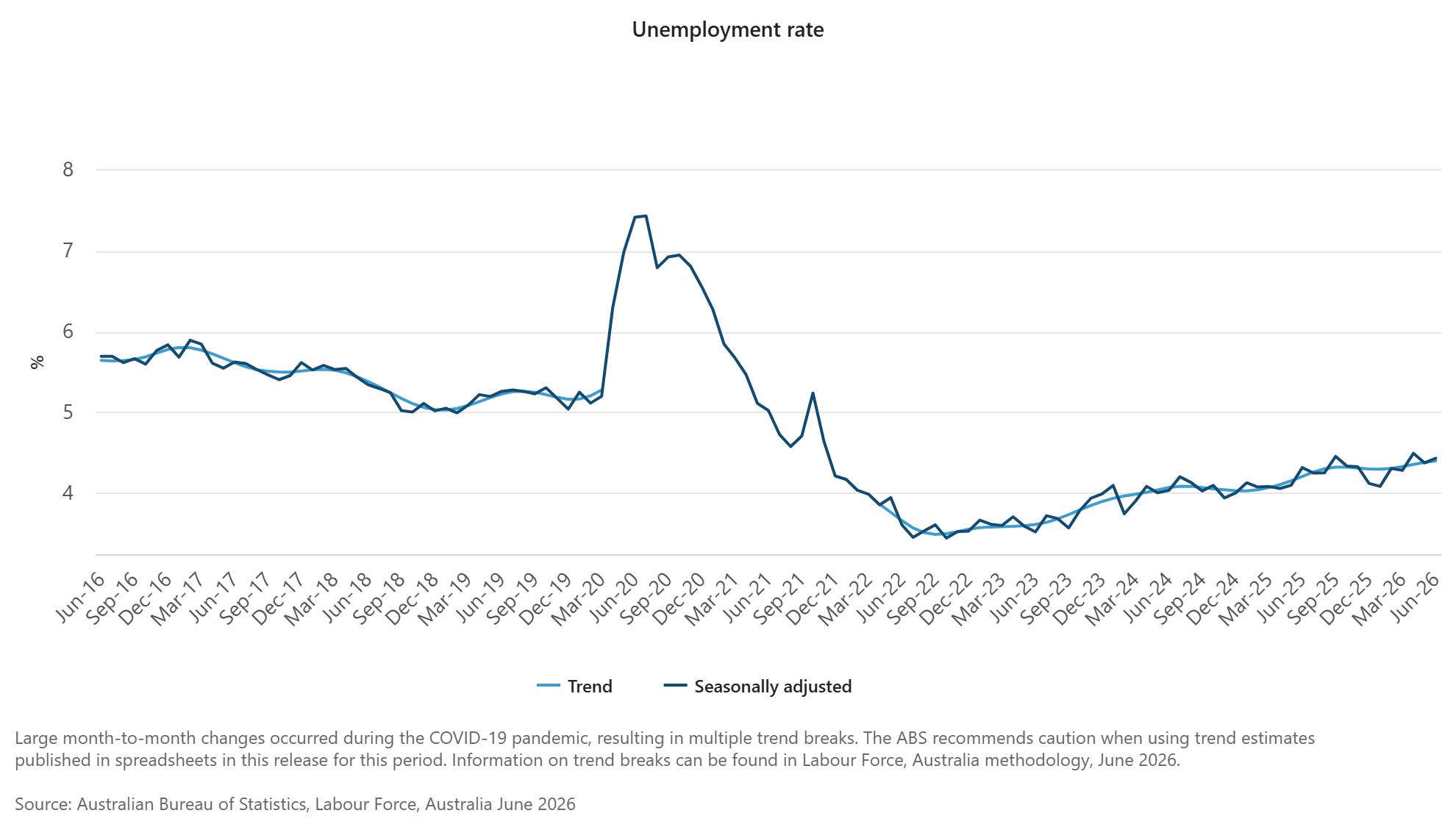
2. The 4.4% unemployment rate remains well below its long-run average.
3. Mortgage holders are still building savings buffers.
4. Fewer than 1% of variable-rate mortgages are 90+ days in arrears.
5. Household net worth reached approximately A$19.2 trillion in March 2026, increasing by A$225 billion during the quarter.
6. Australian banks remain highly capitalised. Major-bank CET1 ratios remain above 11%, exceeding APRA’s ‘unquestionably strong’ benchmark of 10.5%.
7. High-risk lending is constrained. APRA limits the proportion of new loans that banks can make at debt-to-income ratios of six times or more.
8. Australia has a A$4.4 trillion pool of retirement savings. Superannuation assets increased 7.9% over the year to March 2026, creating a deep and steadily growing source of domestic capital.
9. The Australian dollar acts as a shock absorber. The RBA explicitly identifies this channel as a source of resilience.
10. Australia retains its AAA sovereign rating.
11. Federal net debt remains low relative to most developed economies. Net debt is forecast at 19.9% of GDP in 2026-27.
12. Australian government gross debt to GDP at 51.9% remains below that of every major advanced economy. The average for G7 economies is 123.7%.
13. Australia’s population is still growing at 1.5% a year. Population growth supports aggregate consumption, housing demand, infrastructure investment and the tax base.
14. Economy-wide capital investment represented 25.1% of GDP in the March quarter of 2026.
15. Compulsory superannuation creates recurring investment demand. Contributions and investment returns continually add to the domestic savings pool, supporting Australian equities, credit, infrastructure, property and private markets.
16. Resource export income remains historically high and is becoming more diversified. Iron ore remains the largest export earner, but gold exports are forecast to reach approximately A$73 billion in 2026-27, while LNG volumes remain strong.
17. Australia is positioned across several long-term global investment themes. We have material exposure to iron ore, LNG, gold, copper, lithium, nickel, aluminium and critical minerals required for electrification, renewable energy, defence supply chains and data-centre infrastructure.
Don’t underestimate Australia!
Anthony Doyle is Chief Investment Strategist at Pinnacle Investment Management Group.