Register For Our Mailing List

Register to receive our free weekly newsletter including editorials.

Home / 501

Some Reader Survey results, and time to respond

(Thanks for your interest in this Reader Survey, which is now closed with about 800 responses).

It is many years since we found out more about our readers and what they like and don't like about Firstlinks. We have received hundreds of responses to our Reader Survey, but we will leave it open for a few more days to maximise the sample size.

We promise we read and take onboard every one of the thousands of comments received. It is appreciated to hear so many of you look forward to receiving our newsletter.

Your feedback across a dozen quick questions will help to improve our content and it should take only a few minutes. The survey can be accessed via this link, or using the embedded form below.

The responses have been both insightful and surprising. Many have pointed to our independence and breadth of articles as strengths, and subcribers enjoy reading the comments attached to articles.

Age and SMSFs

One surprise has been the age of our subscribers, as the chart below reveals. We're sure there are more younger readers than shown here! Where are all the Gen X and Y? 
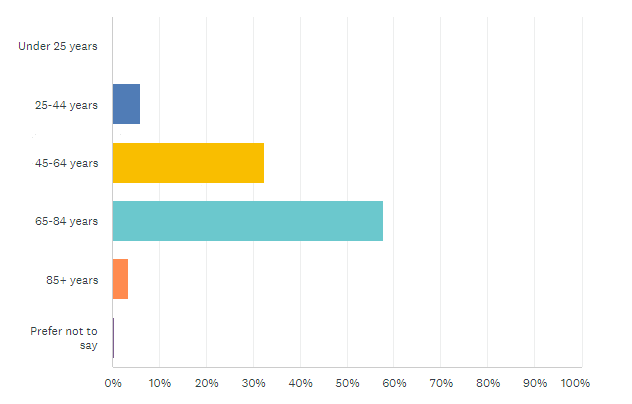
Reflecting this age distribution, most respondents are members of an SMSF, and a high proportion are retired. This is far higher than in previous surveys, and probably shows who is willing to put the time into responding rather than representing our audience.  

Passing to a friend or colleague

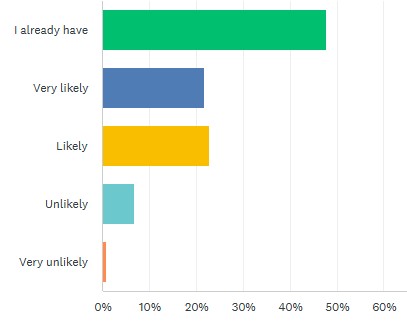
Firstlinks does not play the clickbait game of many newsletters, nor have we ever bought a mailing list, and we rely on our readers to refer the newsletter to friends and colleagues. We are grateful that 93% of respondents have either already referred, or are very likely or likely to, with some reasonable explanations of why they do not:

  • Most of my friends are not interested, simply pay and have others do it
  • I never refer or recommend anything to anybody
  • Most of my friends are dead already
  • I recommend to nobody. A problem with you becomes a problem with me
  • Most folk don't want to know and invest in term deposits and are too afraid to seek paid advice.

How likely are you to refer a friend or colleague to Firstlinks?
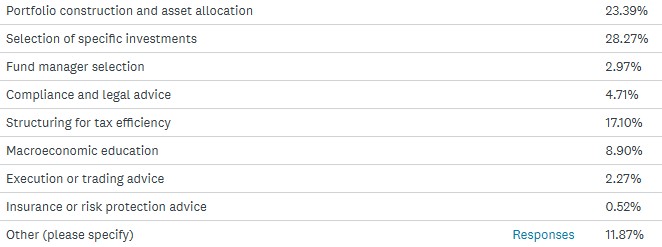
It's also useful for us to learn more about the subjects you would like Firstlinks to cover. 

What part of your investing do you want most help with?
So thanks again to all the respondents and please jump aboard if you have yet to share your views. 


  •   22 March 2023
  • 4
  •      
  •   
banner

Most viewed in recent weeks

It’s time for LICs to die

A high-profile dividend cut and a prominent fund manager’s apology have reignited a long-running debate. If investors can access similar exposures more cheaply and efficiently elsewhere, what exactly is keeping LICs alive?

The retirement scorecard: how many of these questions can you answer?

From the maths of retirement, estimating spending and picking the right asset allocation to survive a poor decade, here are the questions every retiree – current or future – should be able to answer for themselves.

Testamentary trusts: Treasury has picked the wrong reading

A decades-old estate planning tool has survived one tax crackdown only to be caught by another. The surprise isn't who the reform is targeting, but who could end up paying the price for drafting choices made years ago.

Division 296: the initial moves to make before the windows close

What if the best superannuation strategy isn't about earning more, but acting before your options disappear? Several overlooked planning windows are narrowing, with consequences that can last for decades.

How the typical Australian Family could save $844,350 in taxes

The value of a testamentary trust is not determined by wealth alone. Depending on circumstances, it can reduce the tax burden on inherited income, create efficiencies and help build intergenerational wealth.

The housing slide could become a crash

House prices are sliding across Australia, yet the most dangerous ingredient for a housing crash is still missing. If job losses surge amid growing economic risks, today's correction could become a historic property downturn.

Latest Updates

SMSF strategies

Division 296: the initial moves to make before the windows close

What if the best superannuation strategy isn't about earning more, but acting before your options disappear? Several overlooked planning windows are narrowing, with consequences that can last for decades.

Planning

Avoid unnecessary CGT with this estate planning clause

A simple estate plan can create a ticking time bomb. One overlooked clause can pit spouses against children, delay inheritances, and potentially leave a family facing an unexpected tax bill worth hundreds of thousands of dollars.

Exchange traded products

The hidden trade-off in fixed income ETFs

Some investment trade-offs are immediately visible. Others are embedded in the way a portfolio is constructed. Understanding the difference may explain why similar-looking investments can produce surprisingly different results.

Retirement

The mortgage free retirement is fading

What happens when a generation reaches retirement carrying obligations previous generations largely avoided? New research suggests we may need to rethink both how much we need in retirement and what life could look like.

Retirement

The key question to inspire a confident and purposeful retirement

Most people spend decades planning for retirement. Far fewer plan for what happens when they get there. The difference may explain why so many find the transition harder and less fulfilling than expected, despite careful preparation.

Latest from Morningstar

Making the case for a 'good enough' portfolio

Some investors spend years chasing the perfect strategy. Others choose a path that’s simply good enough and move on. Which approach is more likely to deliver both better outcomes and a happier financial life over the long run?

Investment strategies

Is the US market as expensive as CAPE says?

Many investing ideas survive for decades. But that does not make them right. A famous valuation measure implies that US shares are dangerously expensive, but the evidence may point to a very different conclusion.

Sponsors

Alliances

  • ASA-Logo-RGB-ActiveGreen-web.png

© 2026 Morningstar, Inc. All rights reserved.

Disclaimer
The data, research and opinions provided here are for information purposes; are not an offer to buy or sell a security; and are not warranted to be correct, complete or accurate. Morningstar, its affiliates, and third-party content providers are not responsible for any investment decisions, damages or losses resulting from, or related to, the data and analyses or their use. To the extent any content is general advice, it has been prepared for clients of Morningstar Australasia Pty Ltd (ABN: 95 090 665 544, AFSL: 240892), without reference to your financial objectives, situation or needs. For more information refer to our Financial Services Guide. You should consider the advice in light of these matters and if applicable, the relevant Product Disclosure Statement before making any decision to invest. Past performance does not necessarily indicate a financial product’s future performance. To obtain advice tailored to your situation, contact a professional financial adviser. Articles are current as at date of publication.
This website contains information and opinions provided by third parties. Inclusion of this information does not necessarily represent Morningstar’s positions, strategies or opinions and should not be considered an endorsement by Morningstar.