Register For Our Mailing List

Register to receive our free weekly newsletter including editorials.

Home / 342

Tesla surges, VW doesn’t. Here’s why

Google recently joined the trillion (US) dollar valuation club, of which Apple and Microsoft are already members at around US$1.3 trillion each, with Amazon close behind at over US$900 billion. Apple has more than doubled since 1 January 2019.

Tesla winning over doubters

Tesla, too, has been on a tear, doubling in just three months. In California, and now Shanghai, and shortly Germany where it is building its third factory, Tesla is on track to deliver 500,000 cars this year, and a million a year or two later, as we have noted several times over the past two years. The company has already generated US$3.1 billion of operating cashflow since 1 January 2018. It is now the second most valuable car company in the world, worth more than BMW, Ford, Daimler, and of course VW. Only Toyota is bigger.
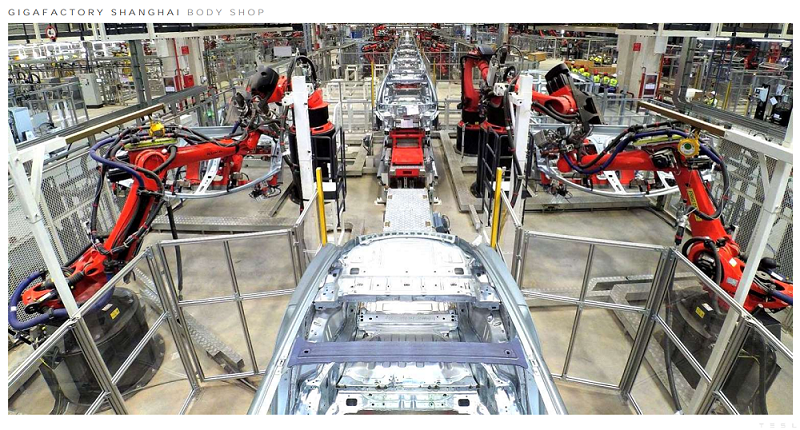

Source: Tesla

Meanwhile, the stock price of VW is trading at 70% of the value it held before what will come to be known as its most critical failure ever, the diesel scandal. It is on a PER of only 6.5x.

Profound disruption across all industries

There is a land grab quality to all this, but frankly, the disruption that is rolling through all industries is profound, making obsolete the business models of companies that have been the largest in the world for decades - like the car and oil companies, but also telcos, retailers, tv broadcasters and increasingly banks.

It is difficult to understand the pricing of some of these disruptive companies unless we see the big picture of the changes in direction by government and society to these whole-of-world issues.

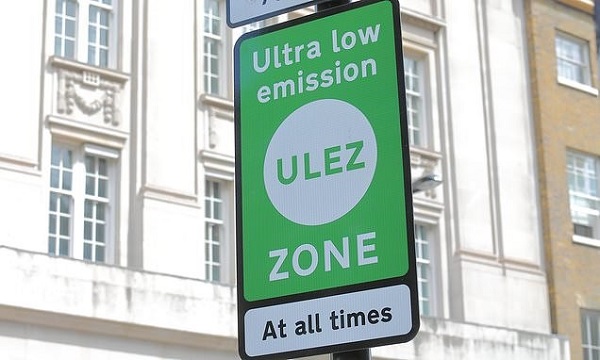
For example, London will charge diesel vehicles an extra tax amounting to between £12.50 and £200 per day when they are used on its roads. Paris already bans pre-2005 diesel cars from the city centre on weekdays between 8am and 8pm. And diesel cars are set to be outlawed entirely from the centre of Paris from 2024, followed by petrol in 2030. In total, 24 European cities with 62 million inhabitants are phasing out diesel cars in the long term, 13 of which want to ban petrol vehicles too. Prominent examples include Paris, Madrid, Copenhagen as well as London and Rome, Bloomberg has reported.

Hundreds of British and European towns and cities have already restricted older model diesel vehicles from the city limits.
Avoiding becoming another Nokia

Volkswagen Chief Herbert Diess last week warned senior management that the company needs to overhaul its business to avoid becoming another Nokia - the company which lost its dominance first to Blackberry and then Apple.

VW owns, and provides the manufacturing platforms for Audi, Bentley, Seat and Porsche. Porsche has already discontinued the diesel of its popular SUV models Macan and Cayenne.

The root of the problem for VW can be traced to the culture that thought it was acceptable to cheat on emissions tests for its diesel cars. At the time, many thought the problem would simply go away, with VW paying a fine and moving on. After all, VW was selling over 10 million vehicles per year.

The company did pay a fine (already in the billions, with more expected) and is moving on, but not in the direction hoped. Following the discovery, VW admitted that it did not have the technology to field a new, cleaner diesel motor.

Diess comments should be seen in this context, and are frankly chilling.

“The era of the classic car makers is over. Volkswagen needs to get a grip on software and electronics as well as producing a raft of electric vehicles and batteries so it can comply with stringent anti-pollution rules. In summary this is probably the most difficult challenge Volkswagen has ever faced.”

The world has seen the problems of fossil fuels, and at the same time been presented with an alternative which isn’t just equal to, but better than those with combustion engines. Meaning faster, of course, but also cheaper to build and cleaner. Battery technology is sufficiently well advanced that energy density is all but irrelevant.

All TV will be streamed?

Another example: consumers are living the changes that are taking place in television viewing – streaming on demand (essentially time shifted viewing), ad-free or ad-supported, etc. Netflix already has more subscribers in the UK after 10 years than Sky UK had after 30, and it continues to grow more quickly.

One of the streaming players has already noted that in the future all television will be streamed, including the plain old TV of today, which is now known as linear tv. They may be exaggerating, but not much.

Netflix is not some chancer in the field. Its quarterly numbers, released last week, were positive at the Earnings Per Share line, as they consistently have been. The fact that the company borrows to invest in content, which it then amortises through its income statement, is no more remarkable than the business model of a railroad laying track or buying bogies. Yet there is still criticism that the company makes no money!
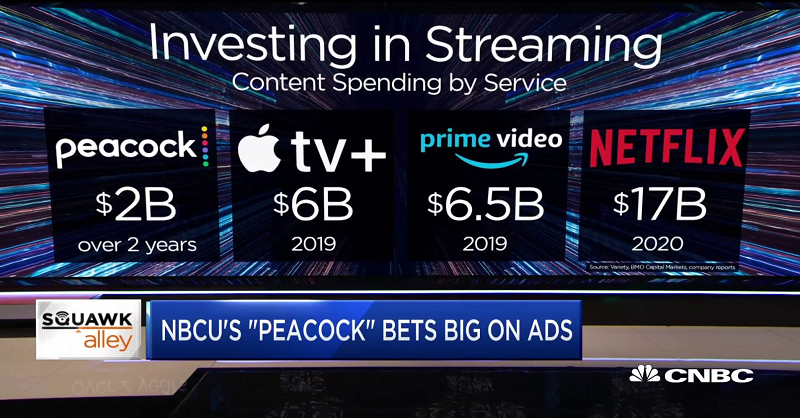
The largest media companies in the world have all announced significant changes to their business models (ie they will stream tv like Netflix), including Time Warner/HBO, Disney, Comcast (owner of NBC Universal Studios). Disney especially should be taken seriously, however a cursory look at its inventory reveals a lot of Marvel and Star Wars content that’s newish (rather than new) and a back catalogue of admittedly excellent animation, but with nothing like the depth of programming of Netflix.

HBO is also a strong contender, but following the acquisition by AT&T, the company has significant balance sheet issues, which will limit its chances of rolling out the quantity of programming required to beat Netflix. The difference here isn’t about production, but the sales channels which will be dismantled, meaning the cable tv bundle, with the significant loss in profitability that this entails.

No such issues exist with Apple and Amazon (or Netflix) which are already adding significant subscribers.

Other examples are everywhere

Look at connectivity and tools to assist agricultural crop yields, virtual banking, transport and the like.

Many investors talk about machine learning, or cloud based infrastructure, but we have investments in this area that have already generated a quantifiable level of return, measure-able from the group of companies within the portfolio which are a part of these thematics.

Meanwhile, the value players (who most likely have been buying VW) have been badly damaged. Advertising, media, banking, retailing, energy, carmaking – all are in the firing line, and it isn’t a cyclical downswing which is hurting, but rather profound structural change.

There is nothing wrong with value investing – there is a time and place for it – but not now, at a point in time when the pace of technology is remaking entire industries (which have taken decades to evolve) in just a few short years.


Alex Pollak is Chief Executive, CIO and Founder of Loftus Peak. This article is for general information only and does not consider the circumstances of any individual.


  •   29 January 2020
  • 4
  •      
  •   
4 Comments
Harry
January 29, 2020

For a guy who runs a "global disruption" fund, Alex should understand better Disruptive Innovation Theory which was first proposed by Joseph Bower and Clayton Christensen way back in 1995. Tesla doesn't remotely fit the definition of a disruptive innovation - a point that is made by Christensen himself in this paper

https://hbr.org/2015/12/what-is-disruptive-innovation

Tesla has simply added to the available car choices for consumers but its technology is something that is already well within the grasp of the traditional car manufacturers who don't sell a lot of them because a) consumers don't really want them yet with their range and refueling drawbacks and b) EVs are very expensive to build and therefore expensive to buy - even Tesla that sells $100,000+ sports cars has yet to make an annual profit.

Also to suggest that EVs are somehow a silver bullet solution to carbon emissions shows a lack of understanding of the facts. EVs generate twice the carbon emissions of ICEs when they are manufactured (due to the battery pack) and (given Australia's electricity mix) could take 120,000 km of driving to pay the environment back relative to ICEs.

Tesla has done a great job shaking up the auto industry but to suggest that it is worth 3x the value of a business like BMW is nonsensical to the extreme. BMW could sell as many EVs as they wanted to if there was a demand for them and they were economically viable.

Arthur Hunt
January 30, 2020

Harry,
Your comment is full of inaccurate exagerations. Tesla cannot meet demand for its Model 3 - there is a 3 month waiting list. It is about to start delivering Model Y for which there are thousands of orders. Thousands of orders also for semi truck which starts production later tis year and over 200,000 orders for the Cybertruck utility to start production in 2021. Why would they be starting a factory in Germany if there is no demand?
Tesla Model 3 uses 12.2kWh/100 km on average which is equivalent to 1.7 litres of petrol / 100km in energy. Can your car match this? It is indeed a silver bullet for carbon emissions.
AH Yeppoon

Harry
January 30, 2020

Hi Arthur,
Thanks for your reply.
EV sales globally represent less than 2% of new car sales which means 98% of new cars sold globally are ICEs. Car makers lose money on every EV they sell (Tesla included) because they are still so expensive to manufacture. That will change over time and when it does EVs will become a greater % of new car sales. At the moment EVs are a niche market. In a global market of more than 80 million new car sales the numbers you are quoting are tiny, which makes it a niche. I'm not buying an EV today because they have limited range and charging infrastructure in Australia is extremely limited. Most Australians agree with me. It is telling that the biggest selling cars in Australia are dual cab 4x4 utes.

On the carbon emissions argument, EVs have a lower carbon footprint than ICEs to run as you correctly point out. If you can charge your EV at home using your solar panels then emissions are close to zero. If you are charging using power generated from coal fired power then the emissions are still less but not by as much as you might think. Mix of energy sources is important. My other point was that an EV produces an estimated 12 tonnes of carbon when they are being manufactured (largely thanks to the battery) while an equivalent ICE only produces 6 tonnes during manufacture. Over the lifetime of the car the EV will eventually produce less carbon than the ICE depending on the size of the battery and the power sources.

Volkswagen did a study comparing the full-life estimate of carbon emissions from the e-Golf relative to the Golf Diesel - take a look:
https://www.volkswagenag.com/en/news/stories/2019/04/from-the-well-to-the-wheel.html#

EVs will help improve air quality in cities for sure so I am all for them.

Tesla is certainly not going to have the market to themselves so I question the current $120 billion valuation on a company that may sell 500,000 vehicles this year. BMW has a market value of $45 bn ($30 bn if you exclude cash on hand) and it sells 2.6 million cars per year including high end EVs

AL
February 03, 2020

Thanks Gents. I enjoyed both of your perspectives on this.


Leave a Comment:

RELATED ARTICLES

Is it time to pull the plug on EVs?

The tipping point for investing in decarbonisation

Is the iPhone nearing its Blackberry moment?

banner

Most viewed in recent weeks

The growing debt burden of retiring Australians

More Australians are retiring with larger mortgages and less super. This paper explores how unlocking housing wealth can help ease the nation’s growing retirement cashflow crunch.

Warren Buffett's final lesson

I’ve long seen Buffett as a flawed genius: a great investor though a man with shortcomings. With his final letter to Berkshire shareholders, I reflect on how my views of Buffett have changed and the legacy he leaves.

LICs vs ETFs – which perform best?

With investor sentiment shifting and ETFs surging ahead, we pit Australia’s biggest LICs against their ETF rivals to see which delivers better returns over the short and long term. The results are revealing.

13 ways to save money on your tax - legally

Thoughtful tax planning is a cornerstone of successful investing. This highlights 13 legal ways that you can reduce tax, preserve capital, and enhance long-term wealth across super, property, and shares.

Why it’s time to ditch the retirement journey

Retirement isn’t a clean financial arc. Income shocks, health costs and family pressures hit at random, exposing the limits of age-based planning and the myth of a predictable “retirement journey".

The housing market is heading into choppy waters

With rates on hold and housing demand strong, lenders are pushing boundaries. As risky products return, borrowers should be cautious and not let clever marketing cloud their judgment.

Latest Updates

Interviews

AFIC on the speculative ASX boom, opportunities, and LIC discounts

In an interview with Firstlinks, CEO Mark Freeman discusses how speculative ASX stocks have crushed blue chips this year, companies he likes now, and why he’s confident AFIC’s NTA discount will reverse.

Investment strategies

Solving the Australian equities conundrum

The ASX's performance this year has again highlighted a persistent riddle facing investors – how to approach an index reliant on a few sectors and handful of stocks. Here are some ideas on how to build a durable portfolio.

Retirement

Regulators warn super funds to lift retirement focus

Despite three years of the retirement income covenant, regulators warn a widening gap between leading and lagging super funds, with weak member insights and patchy outcomes measurement threatening retirees’ financial futures.

Shares

Australian equities: a tale of two markets

From soaring government deficits to the rise of network giants, equity markets are marked by persistent imbalance and rapid structural change. In this environment, opportunity favours those willing to look beyond the obvious.

Investment strategies

Dotcom on steroids Part II

OpenAI’s business appears commoditized and the model is not sustainable in the long run. If markets catch on, the company could face higher borrowing costs, or worse, and that would have major spillover effects.

Investment strategies

AI’s debt binge draws European telco parallels

‘Hyperscalers’ including Google, Meta and Microsoft are fuelling an unprecedented surge in equity and debt issuance to bankroll massive AI-driven capital expenditure. History shows this isn't without risk.

Investment strategies

Leveraged single stock ETFs don't work as advertised

Leveraged ETFs seek to deliver some multiple of an underlying index or reference asset’s return over a day. Yet, they aren’t even delivering the target return on an average day as they’re meant to do.

Sponsors

Alliances

© 2025 Morningstar, Inc. All rights reserved.

Disclaimer
The data, research and opinions provided here are for information purposes; are not an offer to buy or sell a security; and are not warranted to be correct, complete or accurate. Morningstar, its affiliates, and third-party content providers are not responsible for any investment decisions, damages or losses resulting from, or related to, the data and analyses or their use. To the extent any content is general advice, it has been prepared for clients of Morningstar Australasia Pty Ltd (ABN: 95 090 665 544, AFSL: 240892), without reference to your financial objectives, situation or needs. For more information refer to our Financial Services Guide. You should consider the advice in light of these matters and if applicable, the relevant Product Disclosure Statement before making any decision to invest. Past performance does not necessarily indicate a financial product’s future performance. To obtain advice tailored to your situation, contact a professional financial adviser. Articles are current as at date of publication.
This website contains information and opinions provided by third parties. Inclusion of this information does not necessarily represent Morningstar’s positions, strategies or opinions and should not be considered an endorsement by Morningstar.