Howard Marks spoke at the Sohn Hearts & Minds Investment Leaders Conference in Sydney on 11 November 2016.
Howard Marks is a successful investor and writer, and Co-Chairman of Oaktree Capital Management, which he co-founded in 1995. Howard has become known in the investment community for his 'Oaktree memos' to clients which detail investment strategies and he has published several books on investing.
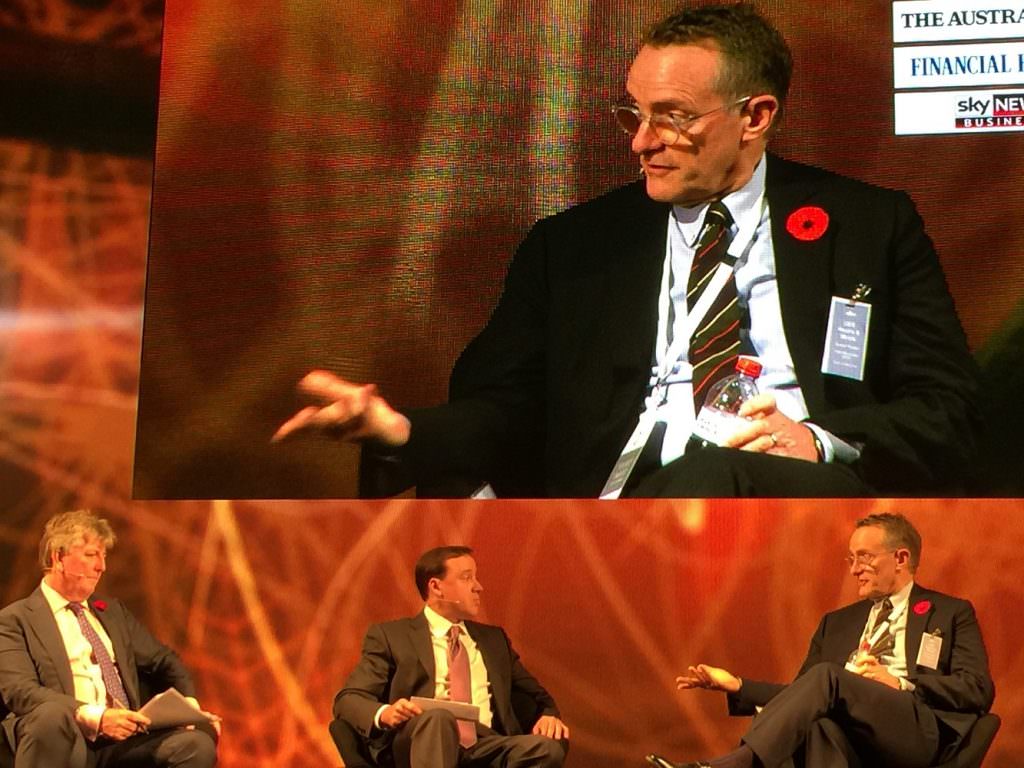
Howard Marks and his Oaktree Capital manage about US$100 billion, predominantly in distressed credit, and he has been writing his ‘Oaktree memos’ since 1990.
On Donald Trump, he said he’s in the ‘I don’t know’ camp. It’s premature to take action, at least until some of his appointments are known. The investment implications depend on how much he will try to implement what he's said during the campaign, and how cooperative the Senate will be. He does not have the control of the Senate to the extent many think as there are narrow margins including people who said will not support him.
Trump should be a pro business on paper, probably more than Clinton, although his view on trade is a big negative. Infrastructure spending and tax cuts would be good for business.
The move to populism is a big issue. Trump touched on an anger, he didn’t create one. He received 55 million votes, including from old rural, non-college educated white guys who are not doing too well. The minority of Americans think their kids will be better off than their parents. The economy will grow more slowly as America has already reached much of its potential.
The idea of efficient markets is compelling. If something is cheap, don’t expect it to stay cheap. Trends tend to eliminate cheapness. Some markets are more efficient than others, which is why he does not operate in well-known, well-appreciated stocks. Knowledge is cumulative, and inefficient markets move to efficient, although there are cyclical inefficiencies.
Oaktree is the leading firm in distressed debt. What is perfect distressed debt theme? It looks worse than it is, so it’s cheap. He avoids technology and fashion stocks, and he needs a sector which can be analysed from the outside, which is why he avoids financial institutions. It’s not possible to evaluate millions of derivative transactions that sit in banks.
He invests in traditional manufacturers which he can analyse. He likes good companies with bad balance sheets, often due to over leverage. He uses bankruptcy laws where the old owners are wiped out and the debt holders take control. His business depends on the availability of distressed companies, but default rates are below average at the moment. This is not prime season for him.
Second level thinking requires a different type of thinking at a deeper level, and the best investors must move from first to second level. In order to outperform, you have to do things differently, you need to think differently. But also need to be better. That’s the hard part as most people flock to the consensus. That’s why there are few superior investors.
There’s a saying that 'you can’t coach height'. It’s not clear you can create second level thinking. When an analyst says he should buy Ford because they just brought out a great new Mustang, he asks whether everyone else also knows that. There's no value in having the usual information.
Predicting how people will react is major requirement. Everything that is useful is counterintuitive. If you’re not confused, you don’t know what’s going on. None of this is easy, and anyone who thinks it is is stupid. The most uncertain thing in markets at the moment is central bank activity. It’s what you know for certain that just ain’t true that gets you into trouble.
Money is to be made in doing things others aren’t. He believes you can’t make money trading, jumping in and out of stocks or bonds, and trading should only be used to make long-term investing decisions. He only buy bonds which he expects to hold to maturity.
Leverage does not make any investment better. “The more you bet, the more you win when you win, as they say in Las Vegas.” If you would not buy without leverage, a company does not suddenly become a better investment with leverage. A margin call could stop you out, and then you don’t enjoy the recovery, and that’s the worst time. Distressed debt buyers then obtain the recovery.
He never considers himself a futurist. Some people have different skills. It’s hard to be right about the major societal trends, but some people can do it. It should become harder over time to make exceptional returns, but superior investors will still do well.
The first great piece of investment wisdom he learned was that you need to be aware of the pendulum swinging from optimistic to pessimistic. Once everyone thinks improvement will last forever, no price is too high and that’s the worst time to invest.
This is general information and the investments may not be suitable as the personal circumstances of any investor are unknown. Cuffelinks accepts no responsibility for the performance of the investments.